Prevention
Best Ways to Keep Rodents Out of Your Crawl Space in Conway
The crawl space is where most rodent problems in Conway homes begin. Here's how to seal it up and keep rats and…
Read articleWe don't just trap, we seal rats and mice out for good, then keep watch so they stay gone.
Rats and mice are opportunists, and Conway's mix of older homes, crawl-space construction, and warm coastal weather gives them plenty of ways in. Roof rats are especially common along the coast; they climb, and they exploit rooflines, soffit gaps, and overhanging branches to get into attics, while house mice slip through openings the width of a dime along the foundation and crawl space. Once in, they gnaw wiring, foul insulation, and reproduce quickly, turning a small entry into a real problem.
Trapping alone never solves a rodent problem, because as long as the entry points are open, new rodents keep coming. Our approach is exclusion-first: we find and seal every gap they're using, remove the active population, and clean up and monitor so the space stays rodent-free. It's the difference between endlessly resetting traps and actually ending the intrusion.
Whether you're in North Myrtle Beach, Forestbrook, Garden City, or elsewhere around Conway, rodent exclusion here has to account for humidity under the floor and a season that never fully closes. That is why the roof rats work holds up longer than a straight interior spray.
Most of this lands on private houses, and residential pest control walks through what a visit involves. Short-term rentals, shops and tenanted buildings sit under commercial pest control.
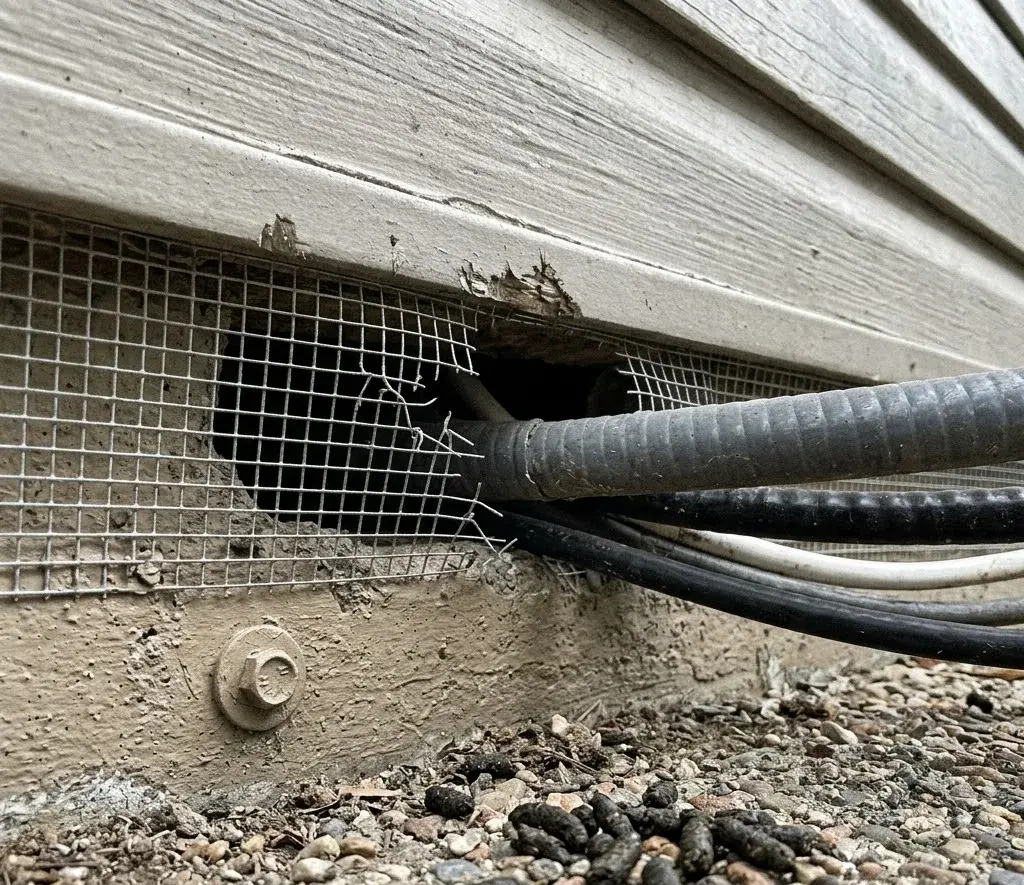
Dark, rice-grain droppings along walls, in the crawl space, or in kitchen cabinets are usually the first hard evidence of an active rodent population.
Noises in the ceiling or walls after dark, especially climbing sounds, often mean roof rats moving through the attic and wall voids.
Gnawing on wood or wiring, and greasy rub marks along their travel routes, show established activity, and chewed wiring is a genuine fire risk worth acting on fast.
We track how rodents are getting in, roofline and soffit gaps, foundation and crawl-space openings, utility penetrations, and map every access point.
We seal the gaps with durable, rodent-proof materials, the step that actually stops the intrusion rather than just thinning it.
We remove the active population with targeted trapping and control, working from the sealed exterior inward.
We advise on droppings and contamination cleanup and monitor to confirm the space stays rodent-free after sealing.
Rodents breed fast and cause outsized damage, chewed wiring, contaminated insulation, and health risks from droppings. Because they keep coming as long as the openings exist, sealing the entry points is the only thing that turns removal into a permanent fix instead of a recurring chore.
Our rodent work follows integrated pest management principles emphasized by the EPA and CDC, exclusion and sanitation first, with any rodenticide used sparingly and per EPA label by licensed technicians.
We follow CDC guidance for safe handling of rodent droppings and nesting material, advising on proper cleanup to reduce exposure to rodent-borne pathogens.
This is the range rodent exclusion tends to sit in locally. How far it has spread, and how easy the substructure is to get into, decide the rest.
| Level | Work involved | Guide range |
|---|---|---|
| Light | One place, found early enough to stay one place | an estimated $160–$525 |
| Usual | Full home visit with the perimeter and crawl space vents covered | an estimated $190–$750 |
| Heavier | A bigger footprint, an addition, or pressure in more than one place | an estimated $285–$1200 |
| Well established | Left long enough that it takes repeat visits plus exclusion work | an estimated $455–$1995 |
None of this is a quote, because the crawl space decides too much of it. The Conway pricing guide goes through what actually moves the figure and what comes as standard.
Exclusion is finding and permanently sealing every gap rodents use to get in, roofline and soffit openings, foundation and crawl-space gaps, and utility penetrations. It's what makes control last, because trapping without sealing just leaves the door open for the next rodent.
Roof rats are agile climbers well suited to the coast. They use tree limbs, wires, and rooflines to reach soffit and attic gaps, so along the Grand Strand a lot of rodent work focuses on the upper structure, not just the ground level.
No, trapping is only part of it. We seal the entry points first (or alongside removal), because trapping alone never ends an intrusion while the openings remain. The sealing is what makes the difference.
Yes. A house mouse fits through a gap about the width of a dime, and rats through a quarter-sized hole. That's why a careful inspection matters, the openings are often smaller and higher up than homeowners expect.
Rodent droppings and nesting material can carry health risks, so we advise on safe cleanup and, where needed, coordinate contaminated-insulation removal. We'll walk you through what's necessary for your situation.
It depends on the size of the home and how many entry points need sealing, but most rodent jobs in Conway run an estimated $189 to $499. Extensive exclusion or crawl-space work is quoted after inspection.
Budget an estimated $189–$499 per treatment for rodent exclusion in Horry County. Raised homes with a wide crawl space and larger lots sit toward the top of that; a small in-town property with one contained problem sits at the bottom. Nothing is charged for looking, and you approve the written figure first.
Written up in more detail, for anyone who wants the whole picture before booking.
The crawl space is where most rodent problems in Conway homes begin. Here's how to seal it up and keep rats and…
Read article
From palmetto bugs to fire ants and subterranean termites, here are the ten pests Conway homeowners deal with most, and what each…
Read article
Both swarm in spring here and only one of them is eating your house. Three tells settle it, and the wings on…
Read articleRing us and describe what you are dealing with. Somebody who works Conway and the towns around it will look before quoting, and looking costs nothing.
Call (843) 896-1048