Ticks picked up at the tree line
The boundary between cut grass and woods, scrub or palmetto is where they concentrate. It explains why one family member who walks the dog along that edge gets them and nobody else does.
Bites possible year-round here, with the heaviest activity from spring into late summer
Most people arrive expecting deer ticks and Lyme disease because that is what the national coverage is about. Clemson reports the lone star tick as the most collected tick species in South Carolina, and it is the one most Conway households encounter. It waits at the boundary where mown grass meets pine woods and palmetto scrub, which is exactly where treatment belongs.
These are the things homeowners spot before they call.
The boundary between cut grass and woods, scrub or palmetto is where they concentrate. It explains why one family member who walks the dog along that edge gets them and nobody else does.
Larval lone star ticks can be encountered in clusters, so finding a number of very small ticks at once after the same walk suggests you crossed a specific patch rather than getting unlucky.
They move to warm, thin skinned, hidden places. A tick check that only looks at ankles misses the ones that matter, which is why the check should cover the scalp, behind the ears, the waistband and behind the knees.
Pets are the most reliable early warning on a property. Ticks appearing after one particular path or field edge tells you where the pressure is and where the yard treatment should go.
Browsed shrubs, flattened paths through scrub and droppings indicate the wildlife that carries ticks onto the property, and a boundary that needs attention.
Habitat is the whole story. Horry County is a patchwork of pine woods, scrub, old field edges and yards cut out of the middle of it, and the lone star tick lives at that transition rather than in the open lawn or deep in mature forest. Clemson notes it is the most collected tick species in the state. Add a deer population moving comfortably between subdivisions and woodland, plus turkey and small mammals, and the hosts that carry ticks to your boundary are present on almost every lot with trees behind it.
The climate then removes the off season. South Carolina's public health department states plainly that tick bites and tick-borne disease can occur year-round here, so there is no month in which a check after yard work becomes unnecessary. Humidity matters too, because ticks dry out easily and need moisture at ground level, which is why leaf litter, pine straw beds, tall grass and shaded ground cover hold them while a sunny mown lawn largely does not.
Conway's shaded lots along the edges of yards backing onto wooded buffers give ticks exactly the ground-level moisture they need, and that pattern holds well beyond town limits. The licensed pros we connect you with find the same tall-grass margins near Horry-Georgetown Technical College, along the maritime forest lots by Briarcliffe Acres, and around the golf communities near Litchfield Beach, where mown fairways meet untouched rough and ticks wait at the boundary for a host to brush past.
Conway's own yards carry the same risk once you look at where lawn care stops, especially on properties backing up to untended acreage near the Waccamaw River toward Bucksport, or out along the farm edges near Galivants Ferry where fescue gives way to fallow fields. Ticks do not need a forest to wait in; a few feet of unmowed fence line or a woodpile shading damp ground is enough. Dogs and kids moving between yard and tree line carry them back inside without anyone noticing the ride.
We deal with this across Conway and the surrounding towns, Finklea, Myrtle Beach and Carolina Forest included.
Blacklegged (deer) ticks and American dog ticks. The single white dot on the female lone star tick is the fastest identification in the field and no other local tick has it. A blacklegged tick is smaller, has a plain reddish body with a dark shield and no dot, and matters because it is the Lyme disease vector. An American dog tick is larger with mottled gray and white marbling spread across the back rather than one clean spot. Clemson lists six tick species people commonly encounter in South Carolina, so if you keep the tick in a sealed bag it can be identified properly rather than guessed at.
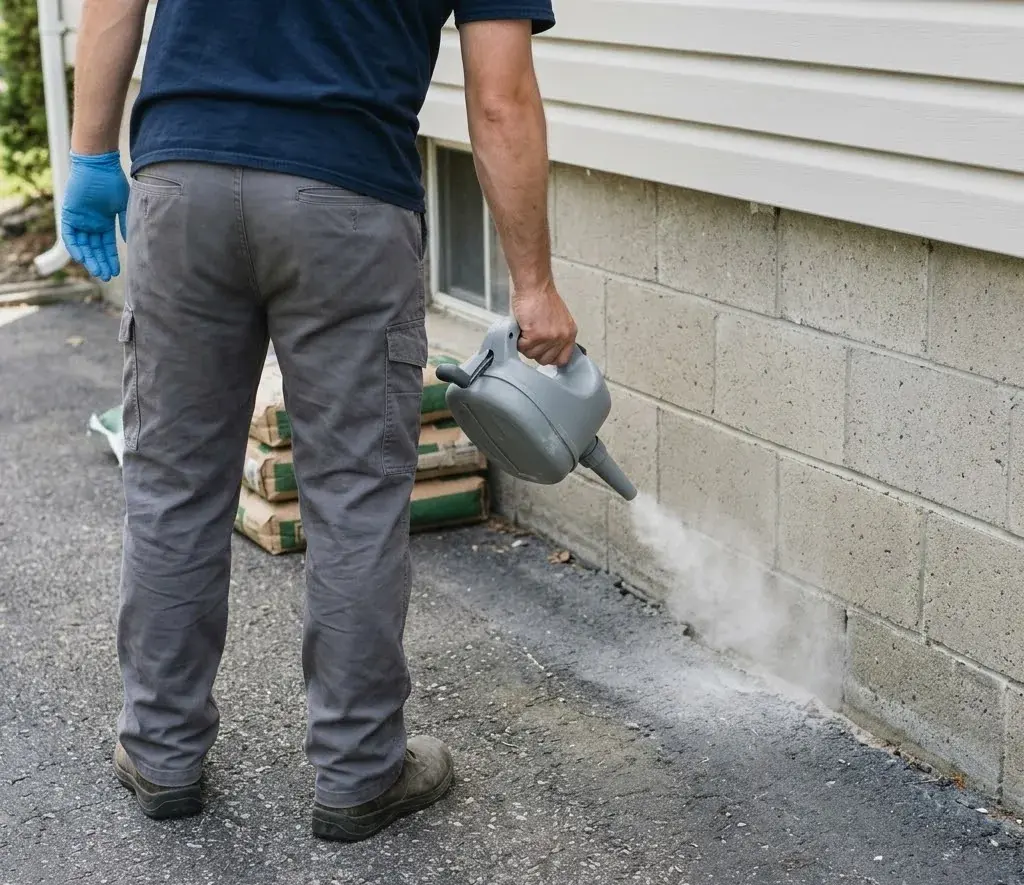
Treating a whole lawn for ticks is mostly wasted product, because that is not where they are. The work is a boundary treatment: a targeted band along the tree line, the fence line, the edges of scrub and palmetto, around wood piles and stone edging, and along the paths people and dogs actually use. Habitat changes are part of the same job, meaning grass cut short in the transition zone, leaf litter and tall weeds cleared back, a defined mulch or gravel strip between lawn and woods, and play equipment moved away from the edge rather than tucked against it.
Timing follows the tick, so applications are scheduled to the active periods rather than once a year, and a property with heavy woodland behind it usually needs more than one visit through the season. Deer and rodent management sits alongside it: fencing or planting that discourages deer from browsing right up to the boundary, and removing bird seed spillage, wood piles and dense ground cover that hold small mammals near the house. Pet prevention prescribed by a vet is an important part of the overall picture, because a treated yard and an untreated dog still brings ticks indoors.
Plenty of lone star ticks situations are done in one call. What decides it is whether the pressure came from an event or from conditions that are still there.
| What you are looking at | The fit |
|---|---|
| Something contained, in one part of the property | Treat it once |
| Pressure off the yard or the marsh, year after year | Recurring visits |
| Something living in the crawl space, a void or the attic | Treatment with exclusion work |
The habitat half is very much a homeowner job and it works. Keep the grass short where the lawn meets the woods, clear leaf litter and pine straw back from that edge, make a defined gravel or mulch strip as a boundary, move the swing set and the dog run away from the tree line, and stack firewood off the ground and away from the house. Then build a routine: light colored clothing, trousers tucked in on wooded walks, an EPA registered repellent, and a proper tick check on people and dogs after every outing, followed by a shower and a hot tumble dry of clothing. Where it is worth handing over is the boundary treatment itself and the timing, plus identification of anything you are unsure about.
Clemson's animal health service states that the lone star tick can transmit ehrlichiosis and southern tick-associated rash illness, and can cause alpha-gal allergy, a reaction to red meat following a bite. That is the verified list for this species in this state, and it is worth knowing without dwelling on it. Remove an attached tick promptly with fine tipped tweezers gripped as close to the skin as possible, pulling steadily straight out with no twisting, then clean the area. Do not burn it, smother it in petroleum jelly, or paint it with anything, since all of those waste time and can make matters worse. Keep the tick in a sealed bag, note the date, and see a doctor if a rash, fever, headache, aching or unusual fatigue follows a bite, or if you begin reacting to red meat hours after eating it.
Budget an estimated $69 to $139 for lone star ticks locally, and treat that as a range to plan against rather than a price. The inspection is free and the scope goes on paper before any work happens. The pricing guide carries the full bands and what shifts them, and the work itself falls under Mosquito & Tick Control.
A turf problem, not a house problem. This one never comes indoors, and that is the point of the page.
Nothing to do with how clean you are. Start with the part people need to hear: bed bugs have nothing to do with housekeeping.
The one everyone here calls a palmetto bug. Ask anyone in Horry County about palmetto bugs and this is usually the insect they mean.
Fine tipped tweezers, gripped on the tick as close to the skin as you can get, then a steady pull straight out without twisting or jerking. Clean the bite and your hands afterwards, and put the tick in a sealed bag with the date in case it needs identifying. Skip the folk methods entirely: burning it, coating it in petroleum jelly or nail polish, or waiting for it to back out all delay removal, and prompt removal is the part that matters.
Lyme disease is carried by the blacklegged tick, not the lone star tick, so identifying what bit you matters. Clemson's guidance for this species lists ehrlichiosis, southern tick-associated rash illness and alpha-gal allergy. Blacklegged ticks do occur in South Carolina, which is another reason to keep the tick in a bag. Either way, the right response to a rash, fever or unexplained aching after a bite is to see a doctor and mention the bite and the date.
Because an open, sunny, mown lawn dries ticks out and they largely avoid it. They sit in the humid leaf litter and low vegetation at the boundary, waiting for something to pass. Concentrating treatment on that band, the paths and the wood pile puts product where the ticks actually are, uses far less of it, and produces better results than blanketing grass that was never the problem.
No, and treating the yard should not replace veterinary prevention. Dogs range beyond the treated boundary, along field edges, on walks and at the beach, and they bring ticks back with them. A tick preventive prescribed by your vet, plus a hands-on check after outings with attention to ears, neck, armpits and between the toes, is the other half of the job.
Book an inspection at no cost. Naming it correctly is what decides whether the treatment holds, and nobody charges you for having a look.
Call (843) 896-1048