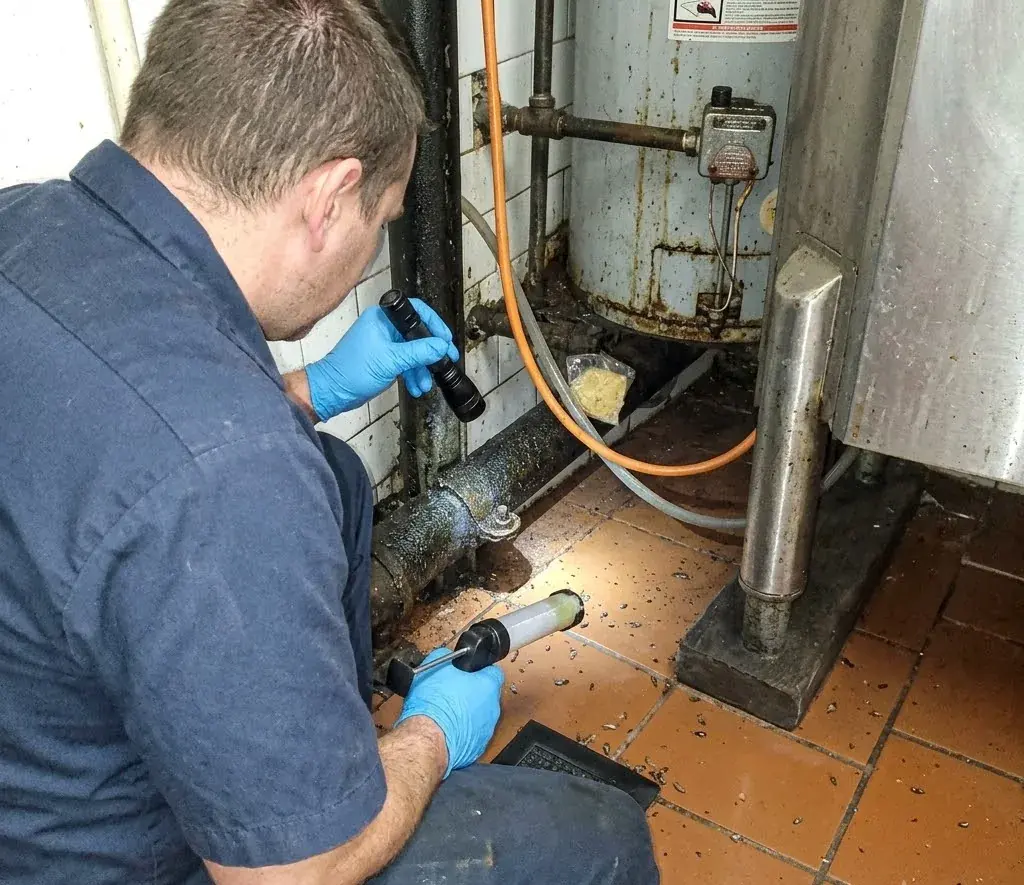
Pest Guide
Yellowjackets, Paper Wasps and Mud Daubers Compared in Conway
Three very different insects get called wasps around here, and only one of them will chase you across the yard. Where each…
Read article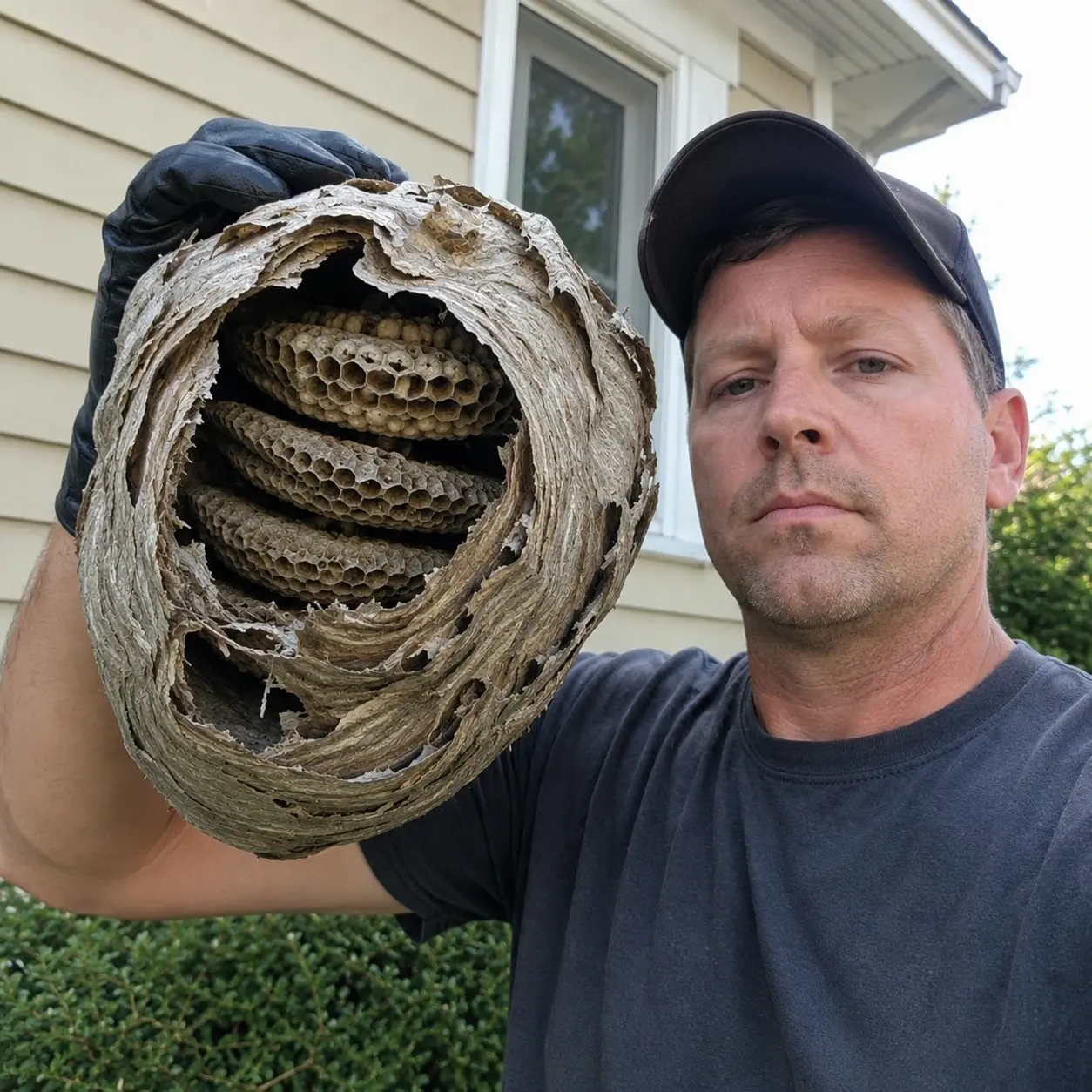
Fast, safe removal of wasp, hornet, and yellowjacket nests, before someone gets stung.
A stinging-insect nest by a doorway, under an eave, or in the ground near the patio turns a normal summer day into a hazard, especially for kids, pets, or anyone with a sting allergy. Around Conway the usual suspects are paper wasps building umbrella nests under eaves and railings, yellowjackets nesting in the ground or wall voids and turning aggressive by late summer, and bald-faced hornets building the big gray football-shaped nests in trees and on structures. All get more defensive as their colonies peak in the warm months.
We remove active nests quickly and safely, then treat and, where we can, seal the site so a new colony doesn't simply rebuild in the same spot. Ground yellowjacket nests and hidden wall-void colonies are especially worth leaving to a pro, disturbing them can trigger a mass sting response. If you've got a nest near where people come and go, it's worth handling before it grows.
Whether you're in Longs, Murrells Inlet, Pawleys Island, or elsewhere around Conway, wasp & stinging insect removal here has to account for humidity under the floor and a season that never fully closes. That is why the paper wasps work holds up longer than a straight interior spray.
Same treatment either way, different scheduling and paperwork: residential pest control for a home, commercial pest control for anything trading or let out to guests.
Umbrella-shaped paper wasp nests under eaves and railings, or a large gray hornet nest in a tree or on the house, near doors and paths are worth removing before someone disturbs them.
Wasps or yellowjackets streaming in and out of a ground hole, wall gap, or soffit usually means a hidden nest, one that's risky to disturb without the right equipment.
Perfectly round, dime-sized holes in fascia, railings, or decking point to carpenter bees, which drill into wood to nest and can cause cosmetic and structural wear over time.
We identify the species and locate the nest, since a paper wasp, a ground yellowjacket, and a wall-void colony each call for a different, safe approach.
We treat and remove the active nest with the right protective equipment, working to avoid triggering a defensive swarm.
We treat the nest site so residual activity is eliminated and the spot is less attractive for rebuilding.
We point out the eaves, gaps, and conditions that invite nesting and, where practical, seal them to discourage new colonies.
Stinging insects send thousands to the ER every year, and a hidden ground or wall-void nest can unleash dozens of stings at once when disturbed. Fast, professional removal, especially of aggressive late-summer yellowjackets, is a genuine safety measure, not just a convenience.
Stinging-insect treatment uses EPA-registered products applied by licensed technicians with proper protective equipment, per label directions, prioritizing safe removal near occupied areas.
We distinguish aggressive pest wasps from beneficial pollinators and, where a honey bee colony is involved, favor relocation-minded options consistent with pollinator-protection guidance.
Take these as guide bands for wasp & stinging insect removal, not a quote. Crawl space access moves this more than square footage does, which is why nobody sensible prices it over the phone.
| Where it sits | What gets done | Estimated band |
|---|---|---|
| Contained | One trouble spot, such as a kitchen run or a single mound | an estimated $85–$250 |
| Standard call | Interior placements plus the weep holes, vents and foundation line | an estimated $100–$360 |
| Wider job | A larger property, or something that has had time to settle in | an estimated $150–$575 |
| Staged work | A problem with a history, so several visits and sealing are involved | an estimated $240–$955 |
Over a year, a plan comes out lower per visit than calling somebody back three times. The pricing guide puts the two side by side and lists what each extra costs.
A small, new paper wasp nest in the open is sometimes manageable, but ground yellowjacket nests, wall-void colonies, and large hornet nests are genuinely dangerous, disturbing them can trigger a mass sting response. Those are best left to a pro with protective equipment.
Stinging-insect nests near entryways are treated as urgent, and we offer same-day service when we can. Call us and we'll get out as soon as possible, especially if anyone in the home has a sting allergy.
We treat the nest site to eliminate residual activity and discourage rebuilding, and we point out the conditions inviting nests. New colonies can start elsewhere on a property during the season, which is why prevention and recurring service help.
Yes. Carpenter bees drill round holes in fascia, railings, and decking to nest. We treat the galleries and advise on sealing and finishing the wood to deter them, since untreated wood invites repeat drilling.
Ground-nesting yellowjackets are among the most aggressive stinging insects here, especially in late summer. We locate and treat the nest directly with proper protection rather than risk provoking the colony.
Most stinging-insect removals run an estimated $99 to $239 depending on the nest's size and location and how difficult it is to reach safely. We confirm the price before treating.
Guide figure, not a quote: wasp & stinging insect removal around Conway usually works out at an estimated $99–$239 per treatment. Heated square footage, crawl space clearance and how much of the structure is already involved decide where you land. The inspection is free, the number is written down before a tank is opened, and we hold our ranges a shade under the going rate along the Grand Strand.
Handy if you are still working out exactly what you have got.
Three very different insects get called wasps around here, and only one of them will chase you across the yard. Where each…
Read article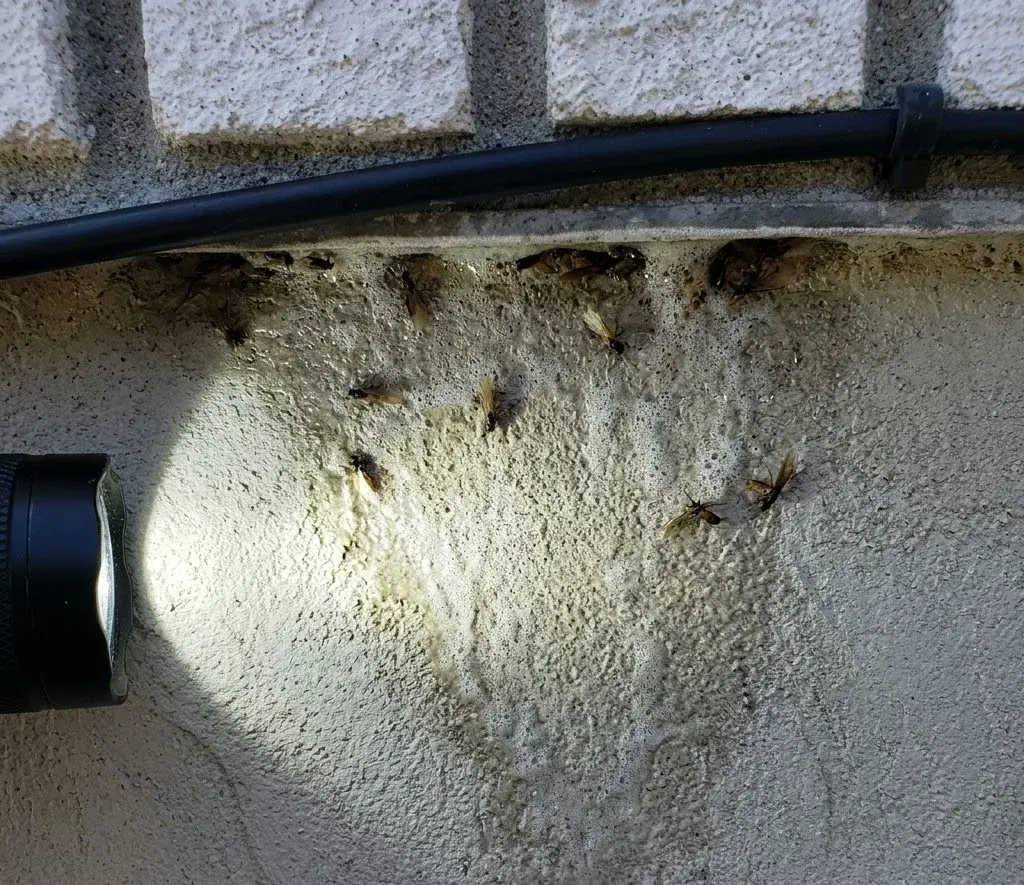
Both swarm in spring here and only one of them is eating your house. Three tells settle it, and the wings on…
Read articleWhen a nest can be left alone, when it genuinely cannot, and why the ones in a bank or a wall void…
Read articleCall and you get a licensed local pro, an inspection at no cost, and a written scope before anything happens. No pressure either way.
Call (843) 896-1048