Local Pest Guide
10 Common Household Pests Found in Conway, SC
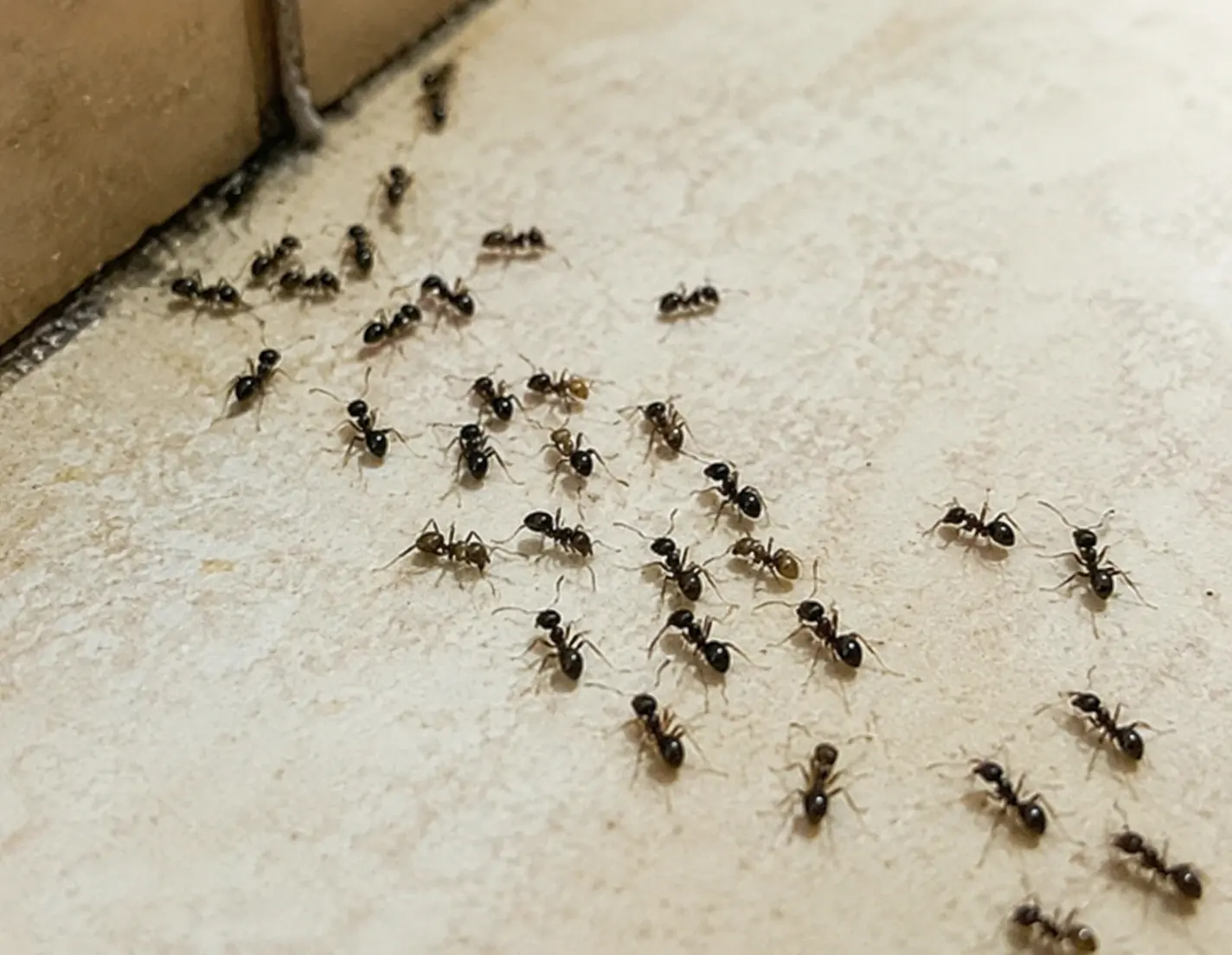
From palmetto bugs to fire ants and subterranean termites, here are the ten pests Conway homeowners deal with most, and what each…
Read article
Protect your turf and outdoor space from chinch bugs, grubs, fleas, and the pests that ruin a Lowcountry lawn.
A healthy Lowcountry lawn takes a beating from insects most homeowners never see until the damage is done. Chinch bugs suck the life out of St. Augustine and other warm-season grasses, leaving spreading yellow-brown patches that look like drought; white grubs chew roots below the surface, causing turf that peels up like carpet; and fleas, ticks, and chiggers turn the yard itself into a biting hazard for people and pets. Conway's heat and humidity keep these outdoor pests active for a long season.
Yard and lawn pest control treats the outdoor space as its own environment, protecting the turf and making the yard usable again. We identify what's actually damaging the lawn, treat the responsible insects, and address the ground-level biters like fleas and ticks that make the yard miserable. Paired with our perimeter and mosquito services, it keeps the whole outdoor envelope of your property in check.
Lawn pest control should begin at the edge of the damage, not with a treatment chosen from a photograph or a brown patch alone. Turf can thin because of insects, drought, irrigation, disease, pet wear, or soil conditions, and more than one cause can be present. An inspection checks the grass, roots, soil surface, sunny and shaded zones, and the pattern of damage before any treatment area is chosen.
The scope also changes with the problem. Chinch bugs, grubs, mole crickets, and sod webworms damage turf, while fleas, ticks, and chiggers make ground-level areas uncomfortable without necessarily killing the grass. Fire ant colonies and mosquito breeding or resting sites need their own methods, so the licensed pros we connect you with should state which pests, lawn areas, visits, watering directions, and follow-up are included in writing.
Whether you're in Green Sea, Red Hill, Homewood, or elsewhere around Conway, yard & lawn pest control here has to account for humidity under the floor and a season that never fully closes. That is why the chinch bugs work holds up longer than a straight interior spray.
On a house, start at residential pest control. If the address is a business, a vacation rental or a multi-unit building, commercial pest control is the page you want.
Irregular dead patches that spread in hot, sunny areas, and don't recover with watering, are a classic chinch bug signature in warm-season Lowcountry turf.
Grass that pulls up easily with no root resistance points to white grubs chewing the roots below, often with birds or armadillos digging to eat them.
Bites after yard work, or fleas and ticks on pets, mean ground-level biters are established in the turf and shaded edges and need targeted treatment.
Shallow ridges, soft ground, and grass that thins or pulls loose can point to mole crickets feeding around the roots. Similar damage can have other causes, so the active edge and root zone should be checked before treatment.
We identify what's actually harming the turf, chinch bugs, grubs, or something else, since the wrong diagnosis wastes treatment.
We treat the responsible insects with products matched to the pest and grass type, protecting the lawn without blanketing it.
We treat fleas, ticks, and chiggers in the turf and shaded edges so the yard is safe for people and pets again.
Because these pests run on a long warm-season cycle here, we time follow-up treatment to keep the lawn protected through the season.
Lawn insects do their damage out of sight and are usually blamed on drought or disease until the turf is already thinning, and fleas and ticks make the yard a health issue, not just a cosmetic one. Correct diagnosis and targeted treatment save both the lawn and the money a full re-sod would cost.
Lawn treatments use EPA-registered products matched to warm-season turf and applied per label by licensed applicators under Clemson Regulatory Services oversight.
Our diagnosis of chinch bugs, grubs, and other turf pests reflects Clemson Cooperative Extension guidance for South Carolina lawns, so treatment targets the actual cause rather than guesswork.
A lawn treatment recommendation should follow an inspection of the damage pattern, active edges, roots, soil surface, and shaded biting-pest zones. The licensed pros we connect you with use those findings to explain what is being treated and why.
Before work begins, the company accepting the job should list the target pests, treatment areas, included visits, watering or mowing instructions, re-entry timing, and follow-up terms. Separate fire ant or mosquito work should be named rather than assumed.
Yard & Lawn Pest Control around Conway usually lands somewhere in here. Where exactly depends on the house, and you get the real figure in writing after somebody has looked.
| How big | What that covers | Estimated |
|---|---|---|
| One spot | A contained problem in one room, the garage or one bed of the yard | an estimated $65–$175 |
| Normal house | A normal whole-house call, indoors and round the outside | an estimated $80–$255 |
| Bigger house | More house to cover, or a population already past the early stage | an estimated $120–$405 |
| Long-running | Long-running pressure needing staged visits and sealing under the floor | an estimated $190–$675 |
None of this is a quote, because the crawl space decides too much of it. The Conway pricing guide goes through what actually moves the figure and what comes as standard.
Chinch bug damage shows as spreading yellow-brown patches in the hottest, sunniest parts of the lawn that don't bounce back with watering, unlike drought stress. We confirm by inspecting the turf at the edge of the damage where the bugs are active.
That's the signature of white grubs eating the grass roots. With the roots gone, the turf loses its anchor and lifts easily, and you'll often see birds or armadillos digging to feed on the grubs. Grub treatment plus lawn recovery is the fix.
Yes. We treat the turf and shaded, humid edges where fleas, ticks, and chiggers live, which is essential if pets are bringing them indoors. It pairs well with our mosquito and tick program for full outdoor coverage.
Yes. We use EPA-registered products applied to the turf with a short re-entry window, after which the yard is safe to use. We'll give you clear guidance on timing after each treatment.
Because our warm season is long, most lawns do best with seasonal treatments timed to pest activity rather than a single application. We'll recommend a schedule based on your grass type and the pests present.
Most yard and lawn treatments run an estimated $79 to $169 per visit depending on yard size and the pests involved, with seasonal programs quoted for ongoing protection. We confirm pricing after assessing the lawn.
It should include an inspection, identification of the pest or likely cause, the lawn areas to be treated, and directions for watering, mowing, re-entry, and follow-up. The exact work may target turf-damaging insects, ground-level biting pests, or both, depending on what is found.
No. General pest control mainly protects the building and its perimeter from household pests. Lawn pest control focuses on insects in the turf, soil surface, and shaded yard edges. A company may coordinate both, but the written scope should show which outdoor areas and pests are included.
Yes. Drought, uneven irrigation, disease, compaction, pet wear, and soil problems can resemble insect damage. That is why treatment should follow inspection of the damage pattern, grass, roots, and soil surface rather than be chosen from color alone.
Not automatically. Fire ant colony control and mosquito treatments use different target areas, products, and visit timing from turf-pest work. Ask the company to list each included pest and service in writing so a lawn treatment is not assumed to cover a separate fire ant or mosquito program.
Most homeowners pay an estimated $79–$169 per treatment for yard & lawn pest control here. Because winters are mild and there is no real off-season, activity that has been running for months costs more to knock down than something caught in week one. We put the figure in writing after the free inspection, never over the phone as a firm price.
Prevention, moisture and timing, covered properly rather than in a paragraph.
From palmetto bugs to fire ants and subterranean termites, here are the ten pests Conway homeowners deal with most, and what each…
Read article
Store sprays have their place, and their limits. Here's an honest look at when DIY pest control works in a Conway home…
Read article
In colder states fire ants slow down in winter. In Horry County, our mild coastal climate keeps them working almost all year…
Read articleCall and you get a licensed local pro, an inspection at no cost, and a written scope before anything happens. No pressure either way.
Call (843) 896-1048