Local Pest Guide
10 Common Household Pests Found in Conway, SC
From palmetto bugs to fire ants and subterranean termites, here are the ten pests Conway homeowners deal with most, and what each…
Read article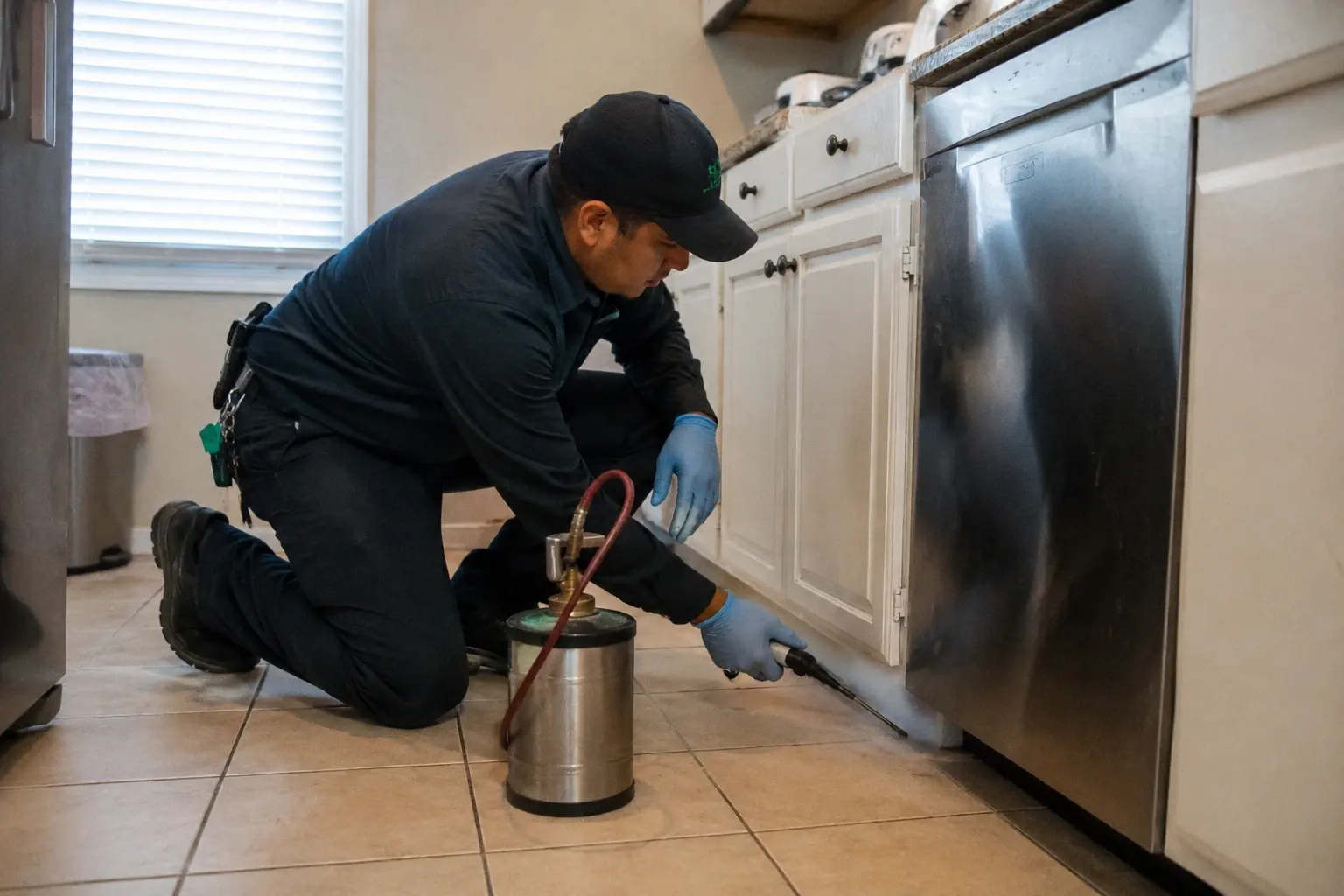
One program for the pests that never really stop here: palmetto bugs, ants, spiders and whatever the crawl space is breeding.
Ask around Conway and nobody describes a single pest problem. They describe a rota. Palmetto bugs when the humidity sits high, ants across a threshold within a day of a hard afternoon storm, spiders through the fall, silverfish anywhere a room never quite dries out. The reason it feels relentless is that there is no freeze here to reset it, so the pressure outside your walls is roughly constant and the species just take turns.
General pest control is the answer to that rather than to any one insect. It treats the building as one thing with an inside and an outside, and it puts most of the effort on the outside, which is where the pressure originates. On a pier built house that means the crawl space, the vents and the penetrations under the floor as much as the doorstep. On a slab in Carolina Forest or Forestbrook it means the weep holes, the sill line and the plumbing entries. Different houses, same idea: stop it at the wall, because dealing with it once it is in your kitchen is the harder and more expensive version.
Whether you're in Myrtle Beach, Carolina Forest, Socastee, or elsewhere around Conway, general pest control here has to account for humidity under the floor and a season that never fully closes. That is why the american cockroaches (palmetto bugs) work holds up longer than a straight interior spray.
Same treatment either way, different scheduling and paperwork: residential pest control for a home, commercial pest control for anything trading or let out to guests.
One palmetto bug at midnight is almost never one. American and smokybrown cockroaches live outside by preference, in mulch, gutters, palmetto crowns and the crawl space, so a couple of sightings usually means a harborage close to the house and a route in that nobody has closed.
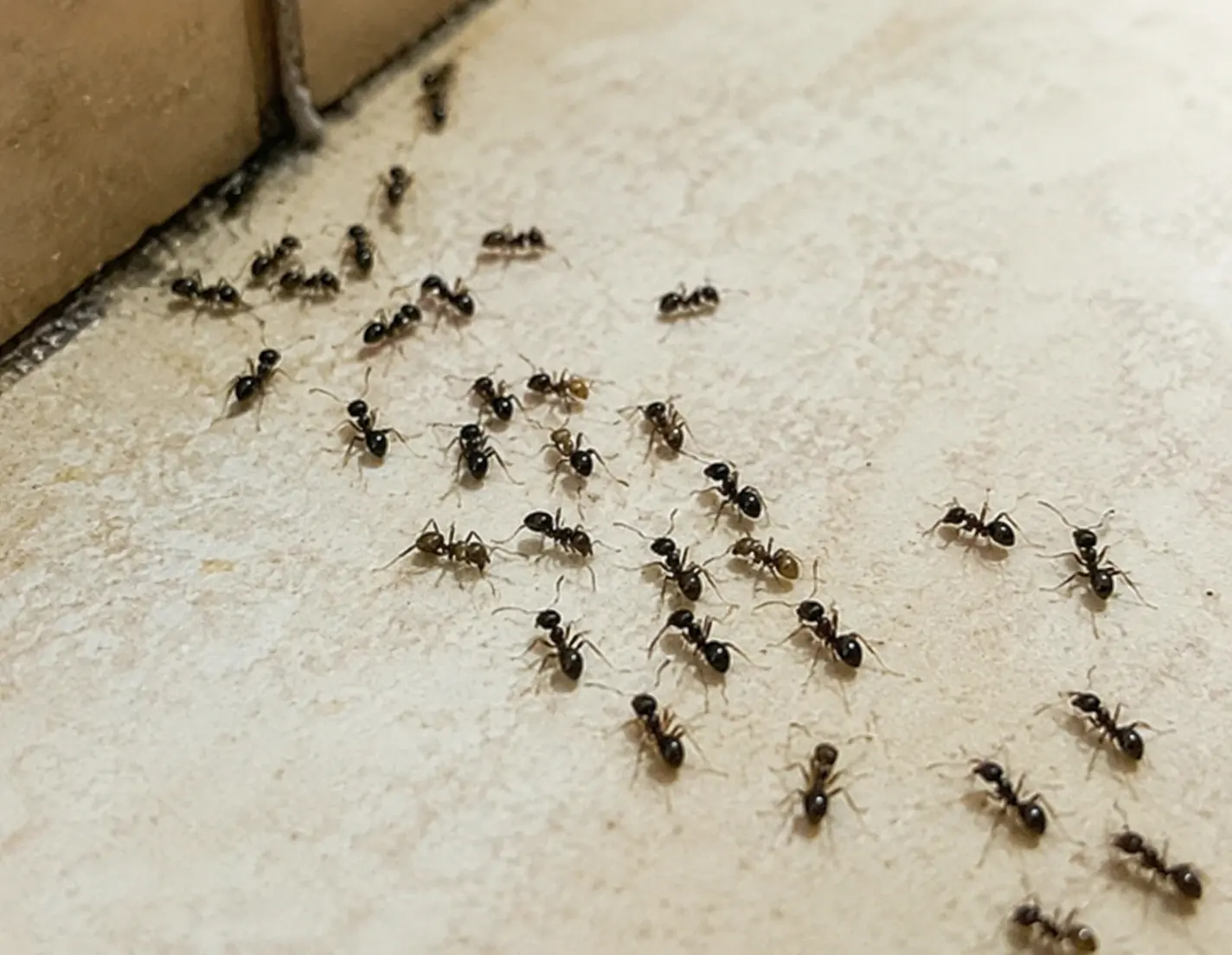
A trail that reforms is a colony working a route, not a scout that got lucky. Argentine ants in particular follow moisture, and a line that keeps returning to the same spot is worth naming before anybody sprays it, because a contact spray splits that species into several colonies.
Both of those track humidity rather than food. Silverfish in a bathroom, webs rebuilding in the same garage corner, and camel crickets under the floor all point back to the same underlying condition, and on this coast that condition is usually the crawl space.
Ants in April, roaches in July, spiders in October. A rotating cast is the signature of outdoor pressure on a building that has several small ways in, which is the exact problem an ongoing exterior program is built to hold rather than a one-off treatment.
A walk round the outside and through the inside, then into the crawl space where there is one. What comes out of that is a list of routes in and damp spots, because in this market the substructure explains most of what is happening upstairs.
Inside, small amounts go into the cracks and voids insects travel: behind kick plates, under sinks, where pipes pass through a wall. Nothing is misted across a room you live in, and gel bait goes where only a roach will find it.
A treated band along the footing, into the weep holes, round door and window frames, under the siding lip and up in the eaves where mud daubers start. This is where the majority of the product on a normal visit actually goes.
On a scheduled plan the exterior gets refreshed through the year, because nothing applied outside survives twelve months of Grand Strand storms. Anything that reappears between visits gets dealt with without a second invoice.
The useful thing to understand about pest pressure in Horry County is that it never resets. Somewhere colder, a hard winter does part of the job and a spring treatment starts from a low base. Here the season simply changes species while the humidity carries on, which is why a single spray clears today and not next month, and why the band around the outside of the house does more good than the interior treatment most people ask for first.
Structural pest work in South Carolina sits in Category 7A, and licensing in that category is mandatory and issued by the Department of Pesticide Regulation at Clemson University rather than by a state agriculture department. The licensed local pros we connect you with hold that license, and the product label, which is legally binding, sets where a product may go and how long to stay off it.
A program copied from a state with real winters assumes a pause that does not happen on the Grand Strand. This one is set to the local pattern instead: termite swarms from late winter, ants and mosquitoes from spring through to the first cool spell, palmetto bug pressure whenever the humidity climbs, and roof rats working attics through the cooler months.
Take these as guide bands for general pest control, not a quote. Crawl space access moves this more than square footage does, which is why nobody sensible prices it over the phone.
| Where it sits | What gets done | Estimated band |
|---|---|---|
| Contained | One trouble spot, such as a kitchen run or a single mound | an estimated $85–$250 |
| Standard call | Interior placements plus the weep holes, vents and foundation line | an estimated $100–$360 |
| Wider job | A larger property, or something that has had time to settle in | an estimated $150–$575 |
| Staged work | A problem with a history, so several visits and sealing are involved | an estimated $240–$955 |
Over a year, a plan comes out lower per visit than calling somebody back three times. The pricing guide puts the two side by side and lists what each extra costs.
The everyday ones: American and smokybrown cockroaches, the ants that get into kitchens, house and wolf spiders, silverfish, earwigs, centipedes, crickets and the occasional beetle that wanders in. Termites, bed bugs, fire ants and anything with fur are separate services, not because of upselling but because each needs different products, different equipment and a different number of visits.
Very little, and almost none of it where they go. Interior material goes into cracks and voids behind and under fixtures, and bait is a bead the size of a rice grain tucked out of reach. Most of the product on a visit is outside on the foundation line and up in the eaves. Re-entry depends on the specific product, so ask on the day and have it written on the ticket.
Expect a clear drop inside the first week and most of the result by two to three weeks. Sightings often go up for a few days first, which is the treatment working: dosed insects leave their harborage and die out in the open where you notice them. Judge it on the trend across three weeks rather than the count on day two.
For a genuinely contained problem with an obvious source, yes, and a one-off is the honest recommendation. For anything driven by conditions, which around here means most things, one visit leaves the cause untouched and you buy a second one-off eight weeks later at full price. The exterior materials also do not last a year in this climate, which is where the quarterly interval comes from.
Usually not. Interior work is aimed into cracks and voids rather than across floors and surfaces, and a good share of the visit happens outdoors. If a particular room needs an hour to itself while something dries, you will be told which room and for how long before it is applied rather than afterwards.
Heat and humidity speed up breeding, and the damp under a vented crawl space is ideal for American cockroaches specifically. Add gutters full of leaf litter and palmetto growth touching a roof line for the smokybrowns, and summer pressure arrives from below and above at once. That is why a summer visit leans hard on the perimeter, the vents and the penetrations rather than on the kitchen.
Treat an estimated $99–$239 per treatment as the planning range for general pest control in Conway. What moves it: the treated footprint, access under the house, and whether the yard needs covering as well as the structure. There is no charge for the visit that produces the exact number, and no fee added on afterwards.
Handy if you are still working out exactly what you have got.
From palmetto bugs to fire ants and subterranean termites, here are the ten pests Conway homeowners deal with most, and what each…
Read article
Store sprays have their place, and their limits. Here's an honest look at when DIY pest control works in a Conway home…
Read article
Both swarm in spring here and only one of them is eating your house. Three tells settle it, and the wings on…
Read articleSame day where we can, and an honest arrival window when you book. We cover Conway and out across Horry County.
Call (843) 896-1048