Bitten beside the back door
A source close to the house rather than in the neighborhood. Check saucers, the gutter above that door, an AC condensate line and anything stored upside down within a few yards.
Roughly March into November, with the worst stretch from June through September
The mosquitoes biting you in the back yard mostly did not come from the marsh. They came from water you could tip out with one hand: a saucer under a pot, a sagging tarp, a corrugated drain pipe, a clogged gutter, a boat cover. Some species complete their whole life cycle in a container the size of a coffee cup, which is why yard work beats spraying.
Any one of these is worth an inspection.
A source close to the house rather than in the neighborhood. Check saucers, the gutter above that door, an AC condensate line and anything stored upside down within a few yards.
Definitive proof of a breeding site. Look in birdbaths, buckets, wheelbarrows, kids' toys, tire swings and the tray under a garden pot after any rain.
Adults rest in cool, shaded, humid vegetation during the day. Dense ground cover, ivy on a wall and the space under a low deck are where they wait, and they are the places treatment targets.
Eggs laid in containers hatch and develop within days, so a downpour produces a wave of adults roughly a week later. It is the reason yard checks matter most just after a storm.
Flexible drain pipe laid without a fall holds water in every dip and cannot be seen into. It is one of the most productive and most overlooked breeding sites on local properties.
The season here is long enough to change how people plan their yards. South Carolina's public health department monitors West Nile virus activity in birds from around mid March into November, which is a fair proxy for how long mosquitoes are active in this part of the state. Warm nights, frequent rain and heavy summer humidity mean that a container refilled by an afternoon thunderstorm can produce adults before the next storm arrives, and that cycle repeats from early spring until well after the tourist season ends.
The honest part is what nobody can treat. Tidal creeks, the salt marsh behind the barrier islands and the swampy edges along the Waccamaw produce mosquitoes on a scale no yard program touches, and that sets a background level for the whole area. Salt marsh species also travel further than container breeders. So the realistic goal on a Conway property is removing what your own lot produces and cutting the adults resting in your vegetation, which is a large improvement, not an absence of mosquitoes.
That coverage extends well past Conway, too. The licensed pros we connect you with also treat mosquito pressure down toward Georgetown, where the Sampit River waterfront and the rice-country wetlands hold standing water within easy flight range of the Front Street historic district, and out toward Litchfield Beach, where the golf communities near Litchfield-by-the-Sea face the same tidal-marsh volume on a bigger scale.
Standing water doesn't need a city limit sign to breed mosquitoes, and the pattern holds just as well out along US-501 toward Aynor, where the surrounding farmland and drainage ditches through western Horry County pine woods give larvae plenty of quiet water between rains. Downtown Aynor deals with the same evening swarms as anywhere closer to Conway, and the licensed pros we connect you with treat both ends of that stretch with the same fogging and larvicide approach, timed around whatever the last storm left standing.
Calls for it come in from all over Horry County, Galivants Ferry, Green Sea and Red Hill among them.
Biting midges and crane flies. If the bite arrived before you saw anything, it was probably a biting midge rather than a mosquito, since midges are a fraction of the size and pass through ordinary window screen. A mosquito is visible, has long legs and a clear needle like mouthpart, and you can usually hear it. Crane flies get killed on sight in local kitchens for no reason at all: they are large, gangly, harmless and do not bite. Getting this right matters, because midges and mosquitoes are not treated the same way.
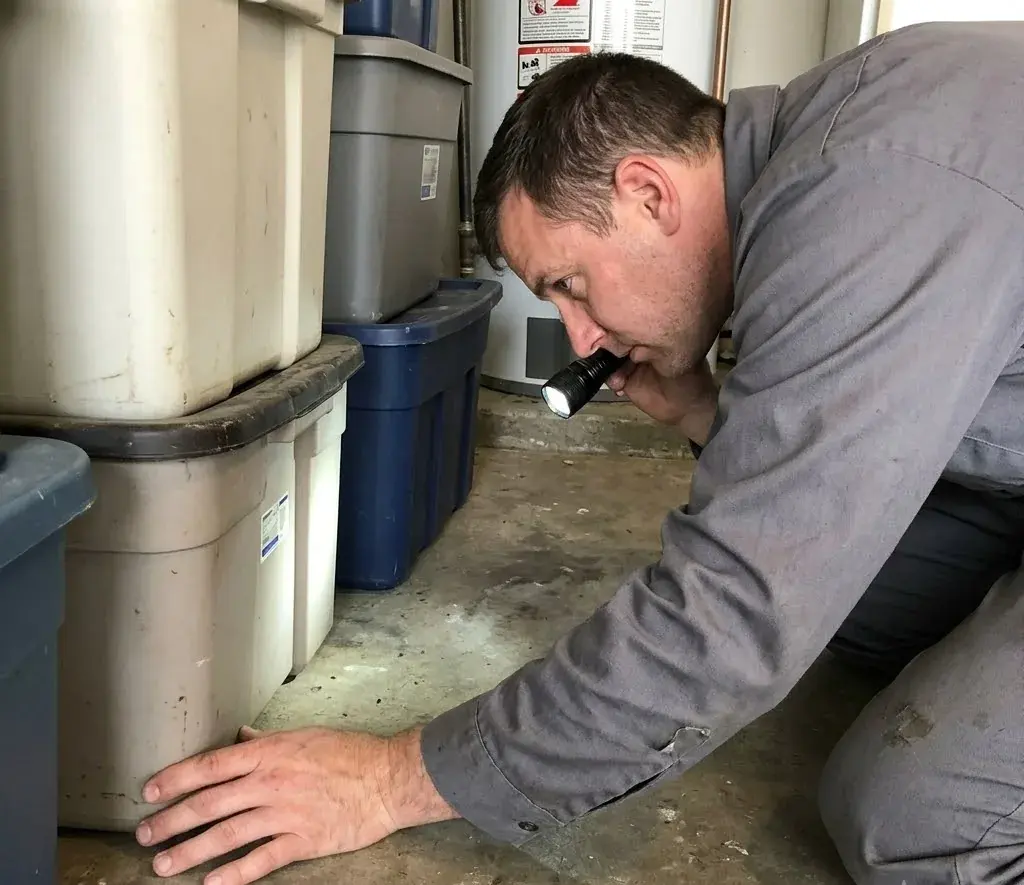
The visit that helps most starts as a walk around with a flashlight and a bucket. Every container, saucer, tray, tarp, toy, tire, cover, gutter, downspout, drain pipe, low spot and clogged catch basin gets emptied, tipped, drilled or noted, and anything holding water that cannot be drained, such as a rain barrel, an ornamental pond or a permanently wet ditch, gets a larvicide instead. This is unglamorous and it is where the actual reduction comes from, because removing the source removes the next generation rather than the current one.
Adult control then targets where they rest, not the open air. A residual treatment is applied to the underside of leaves in dense shrubs, ivy, ground cover, the shaded side of a fence and under a deck, which is where adults sit out the heat of the day, and it is renewed roughly monthly through the season because it breaks down in sun and rain. For an event, a shorter acting knockdown application a day or two beforehand helps for the evening in question. In vitamin B patches, bug zappers, ultrasonic devices and citronella candles, none of which stand up to testing, no program has any business.
Whether mosquitoes wants ongoing cover comes down to the cause. Fix a route in and it is a job. Leave a damp crawl space and it is a season.
| How it presents | What that usually needs |
|---|---|
| One place, one cause, spotted early | A single visit |
| A pattern rather than an incident | Cover through the year |
| Anything set up inside the structure itself | Both: the animal and the hole |
This is one of the very few pests where a determined homeowner gets most of the benefit for free. Walk the property after every heavy rain and tip out everything: saucers, buckets, toys, tarps, boat and grill covers, the wheelbarrow, the recycling bin lid. Clear gutters, drill drainage holes in anything that has to stay outside, change birdbath water weekly, and store containers upside down. Cut back dense ground cover against the house and thin the shrubs that keep the ground damp and shaded. Fans on a porch genuinely help, since mosquitoes are weak fliers. Where DIY hits its limit is a neighbor's untended pool, a ditch that never drains, and treating resting vegetation properly, and no amount of effort removes the marsh in the background.
South Carolina's Department of Public Health lists the mosquito borne diseases of concern in this state as West Nile virus, eastern equine encephalitis, La Crosse encephalitis, Saint Louis encephalitis and dog and cat heartworm. DPH also notes that where the virus is present, well under one percent of mosquitoes carry West Nile, so the sensible framing is low risk rather than no risk, with older adults and anyone immune compromised most likely to become seriously ill if infected. Practical steps are ordinary: use an EPA registered repellent, cover up at dawn and dusk, keep screens intact, and talk to a vet about heartworm prevention for dogs and cats. Any sudden high fever, severe headache, confusion or stiff neck after a summer of bites is a reason to see a doctor promptly.
Mosquitoes normally comes in somewhere from an estimated $69 to $139, with access under the floor moving it as much as anything. Nobody charges you for the looking, and the figure is written down before a technician starts. Every band, and what pushes it up, sits on the pricing guide, and the service covering it is Mosquito & Tick Control.
The tick you actually have here. Most people arrive expecting deer ticks and Lyme disease because that is what the national coverage is about.
A climber, not a burrower. Noise overhead at night on this coast usually means a rat that climbed rather than one that dug.
The one spider here worth respecting. Almost every spider in a Conway house is harmless, and this is the exception that earns some care.
No, and anyone who says otherwise is overselling. Tidal creeks, marsh and swamp around the Grand Strand produce mosquitoes continuously and no private treatment reaches them, so there is always a background level arriving from outside your property line. What a good program does is remove everything your own lot is breeding and knock down the adults resting in your vegetation, which for most families is the difference between unusable and comfortable.
A residual application to resting vegetation typically holds up for around a few weeks before sun and rain degrade it, which is why season long programs are usually monthly. A heavy rain soon after an application shortens it. Source reduction, by contrast, keeps working for as long as the container stays empty, which is the main reason a good visit spends time on your gutters and saucers rather than only on the sprayer.
Bug zappers kill large numbers of harmless insects and very few biting mosquitoes, and ultrasonic gadgets do not work at all. Automatic misting systems do reduce adults, but they apply insecticide on a timer whether mosquitoes are present or not, which is a poor fit with targeted treatment and hard on pollinators. A fan on the porch and an emptied saucer both outperform a zapper.
It depends on how it is applied. Treatment should go onto resting vegetation rather than blooming flowers, be avoided when bees are foraging, and stay off vegetable beds and water features. Say where the beds, hives and the dog's usual patch are before work starts. The label sets any period to keep off the treated area and the applicator has to follow it and tell you what it says.
Mosquitoes respond to carbon dioxide, body heat, skin chemistry and movement, and those vary between people, so some family members genuinely do attract more attention. It is not a reason to buy anything special. The measures that work are the same for everyone: an EPA registered repellent applied properly, covered ankles at dusk, and a yard that is not producing its own mosquitoes.
One free inspection settles what it is and how far it has traveled. The estimate lands in writing before a technician starts.
Call (843) 896-1048