Offices
Discretion is half the job
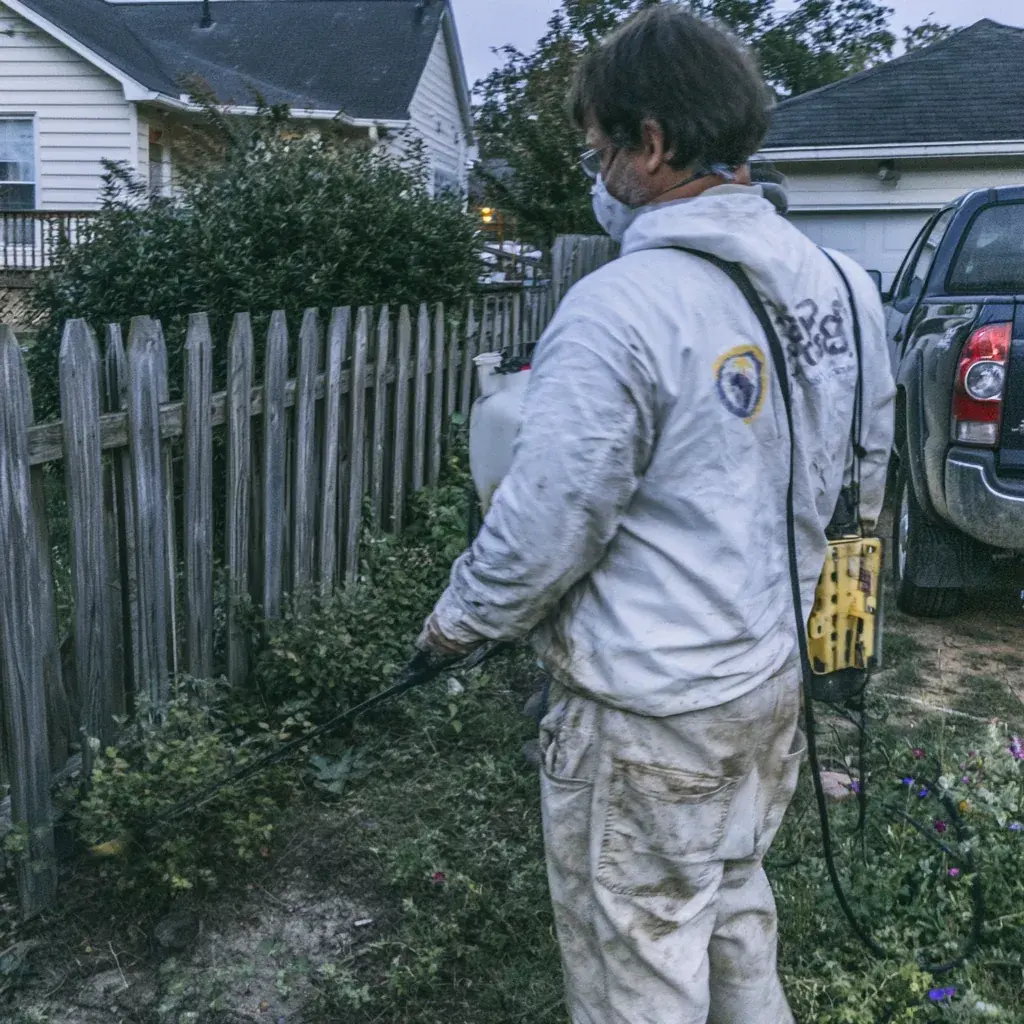
A few hours between one family leaving and the next one arriving, and no owner within a hundred miles.
Weekly rentals along this coast turn over on a Saturday with a few hours between guests, usually handled by a cleaning company rather than anybody who owns the place. That timetable decides everything: problems are found by whoever holds the key, reported by a guest three days into a stay, and fixed by somebody who has to get in and out between bookings.
Most weekly lets on the Grand Strand empty around ten or eleven and fill again in the afternoon. Inside that window a cleaning crew has to strip and remake beds, run the laundry, deal with the kitchen, the sand, the bathrooms and the trash, and be gone before the next car pulls in. Nobody in that sequence is being paid to lift a mattress edge or look behind a headboard, and nobody has an hour spare to wait for a technician.
So the practical unit of work is not a monthly visit. It is a short repeatable check that fits inside the turnover, plus a way to get a professional into the property on a weekday when the calendar has a gap. A property that only ever gets attention when a guest complains is a property being managed in the two worst possible windows: mid stay, with people in the beds, or on a Saturday afternoon with an arrival due.
It also changes who needs to be trained. On a hotel floor the person who finds things is your employee. Here it is a contractor's cleaner, working to a checklist somebody else wrote, often across a dozen properties for different owners in the same day. If that checklist does not mention what to look at and where to report it, then in practice nobody is looking.
The changeover clock itself moves with the property's location. A cleaner working a Cherry Grove finger canal unit near North Myrtle Beach has a different window than one turning over a cottage in the oceanfront cottage grid off US-17 Business by the Surfside Beach Pier, and a Conway booking agency coordinating both from a single office rarely accounts for that gap. The licensed pros we connect you with build inspection routes around actual drive times, not a shared spreadsheet template that assumes every unit sits equally close to the coast.
Three parties usually touch a rental and each one assumes one of the others has this covered. The owner is often out of state. The manager holds the calendar, the guest relationship and the money. The cleaning company holds the key and is the only one who sees the inside of the property every week. When an insect turns up in a review, all three read it at once and none of them has agreed in advance who books what.
Worth knowing where you stand legally, because it is not where a long term rental stands. South Carolina's Residential Landlord and Tenant Act sets out landlord duties for dwelling units, and it explicitly does not govern transient occupancy in a hotel, motel or other accommodations subject to the state sales tax on accommodations. A one week beach stay is not a tenancy, so the framework here is your management agreement, your cleaning contract and your platform's own policies rather than that Act. Which means the split of responsibility is whatever you wrote down, and if you wrote nothing down it is whoever loses the argument.
Put it in the agreements in plain words. Who pays for a routine exterior program. Who pays when a guest brings something in. Who is authorized to book a treatment without waiting for an owner in another time zone to answer a message. What the cleaner is required to look at and where they log it. And what happens to the booking if a property genuinely cannot be occupied for a night.
Rental owners running properties out of Conway often manage a second unit near Pawleys Island or down toward Georgetown, and the same written agreement should travel with them. A cottage near the Hammock Shops has different exterior exposure than a place off the Sampit River waterfront in Georgetown, so the contract needs to name who calls the licensed pros we connect you with when Winyah Bay's humidity or the salt marsh brings something in between cleanings, not just what happens on Conway's own listings.
| The task | Usually the owner | Usually the manager or cleaner |
|---|---|---|
| Recurring exterior and perimeter program | Pays for it as a cost of the asset, like HVAC servicing | Books the access window and lets the technician in |
| Door sweeps, screens, sealing pipe collars and slider tracks | Approves and funds the repair | Reports the fault with a photograph the week it appears |
| The turnover look at beds, sofas and luggage stands | Requires it in the cleaning specification | Carries it out and records it, every changeover |
| A guest report mid stay | Kept informed, not the first responder | Confirms what is there, moves the guest if needed, books the visit |
| Encasements and interception devices | Funds them once per bed | Checks them for splits and reads them on a set day |
| The record of what has been done | Holds the file for the property | Adds to it after every visit and every finding |
Four minutes is enough if the route is fixed and the cleaner is not being asked to make judgments. The bed is already stripped and pulled off the wall, which is the expensive part of any inspection and it is already done. So: the mattress piping on both faces, the box spring corners and the underside of the dust cover, the frame joints and bolt holes, the headboard mount and the wall behind it, the nightstand drawer runners, the sofa seams and under the cushions, and the luggage stand opened out rather than glanced at. Then the kitchen: under the sink, behind the coffee machine, the crumb line at the back of the counter.
The point is the report, not the diagnosis. A cleaner does not need to identify an insect. They need to photograph what they found, note the room, and send it to one number, and they need to know that doing so will not cost them the contract. A cleaning company that gets blamed for finding something will stop finding things, and that is the most expensive thing an owner can arrange by accident.
One more line for the specification: never move a mattress, sofa or chair out of the property until somebody has looked at it. An item dragged down a shared corridor or a stairwell on the way to a dumpster leaves a trail through the building, and in an oceanfront stack that trail runs past other owners' units.
Rental complaints on this coast are predictable enough to prepare for. Palmetto bugs, which come up a drain line or in under a slider on a humid night and terrify people who have never seen one. Ants on a kitchen counter, usually working a line from a slab joint to whatever the last family left out. Fleas in a pet friendly property, left behind by a dog that stayed the week before and hatching out just in time for the next arrival. No see ums and mosquitoes, which get blamed on the property when they came through a screen with a tear in it or a porch door that spent the evening open. And bed bugs, which are the rare one and the expensive one.
Four of those five are cheap to prevent and none of the four needs a chemical answer first. A slider that closes to a seal. Screens repaired rather than taped. A drain that gets water down it during a vacant week so the trap does not dry out. Yard drainage that does not leave a bucket of standing water beside the deck after every afternoon storm. Fire ant mounds treated in a yard where children will be barefoot in July, which is a liability question as much as a comfort one.
The fifth one is why the turnover look at the bed exists. Nothing else on the list justifies taking a property off the calendar, and this one occasionally does, which is exactly why you want it found by a cleaner on a Saturday morning rather than by a family on a Wednesday night.
An oceanfront condo shares almost everything. The wall voids, the plumbing chase, the corridor, the trash chute, the elevator and the laundry all connect your unit to units you have no control over, so a problem in a neighboring stack arrives in yours without crossing an outside door. Salt air is hard on the hardware that keeps it out: sweeps go brittle, slider tracks fill with sand and stop closing to a seal, screen mesh corrodes at the frame, and the balcony slider gets left open by every guest who wants to hear the ocean. Ants, palmetto bugs and no see ums all use that. The upside is that the building usually has a management company and a pest contract already, so the question to ask is what that contract covers and whether the common areas are on the same schedule as your unit.
An inland house in Carolina Forest, Socastee or out toward Aynor is the opposite trade. You control the whole envelope and you also own every route into it. That means the crawl space, the vapor barrier, the vents, the mulch banked against the siding, the fire ant mounds in a yard where children will be barefoot in July, mosquitoes breeding in whatever holds water after an afternoon storm, and a screened porch that guests will leave open. Nobody is treating a shared corridor for you because there is no shared corridor.
Occupancy patterns differ too. A high rise unit turns over most weeks of the year. An inland house often sits empty for stretches in winter with the thermostat set high and the humidity climbing, which is exactly when palmetto bugs come up a drain line and ants find a kitchen with nothing to interrupt them. A vacant month is not a quiet month here, it is an unsupervised one.
A guest three days into a week does not file a maintenance ticket. They message the platform, they ask for money back, and they write the sentence that sits on your listing for the next two seasons. Everything about the way rentals are booked amplifies that: a family choosing between four similar properties reads reviews before they read anything else, and one specific insect named in one review does more damage than a dozen vague complaints about towels.
Which is why the mid stay response matters more than the treatment. Get somebody to the property, confirm what is there, be straight with the guest about what happens next, and move them if the property genuinely cannot be occupied. A refund handled quickly and a message that reads like a competent business costs less than the review you get from a week of being told somebody will look into it.
Pricing for rentals is usually per property with a discount where a manager brings a portfolio, and a two bedroom oceanfront condo does not cost the same as a four bedroom house with a crawl space and an acre of yard. Expect a band while somebody works out which of your properties need what, and ask for one off remediation to be quoted separately from the recurring program so you can pass the right cost to the right party.
We take on premises of this kind throughout the area, Garden City, Little River and Aynor. Sitting just outside it is still worth a phone call, because routing often makes it work anyway.
On this sort of site the figure normally sits between an estimated $89 and $249 per visit, driven by size, how frequently we come out, and what has to be logged for an inspector. Nobody charges for the initial walk round, and the scope is written down first. Full ranges are published on the pricing guide, and the commercial overview explains how a scheduled account is run.
Discretion is half the job
Scale changes the method
The stack, not the door
Get eyes on it before you get into money. Ask for a photograph, ask which room, and get somebody to the property the same day if you can, because a description turns into an argument and a photograph turns into a decision. Be plain with the guest about what you are doing and by when. If the property cannot reasonably be occupied, move them or refund promptly rather than negotiating across three days, since the cost of the argument shows up on the listing long after the money has been settled.
Whatever your management agreement says, which is why the agreement needs a clause on it. A workable default is that the owner funds the recurring program and the physical repairs because those belong to the asset, while the manager holds the authority to book an urgent visit inside an agreed limit so nothing waits for an owner in another state to reply. Guest caused incidents are a separate conversation and should be described in the agreement before one happens rather than after.
Some work can, plenty cannot, and the honest answer depends on the label of whatever is used. Anything applied has directions that set out where it may go and how long a space should be left, and a technician has to work to that rather than to your check in time. Exterior work, monitor checks and inspection generally fit a changeover. Interior treatment for something like bed bugs does not, so that is a booking you take offline for a day rather than squeezing between two families.
If a guest has named an insect in a review, or a cleaner keeps mentioning something in the same unit, the fix starts with a fixed four minute route at every changeover and one number to report it to. Call and we will put you with licensed local pros who handle rental portfolios along the Grand Strand, treat a condo stack and an inland house as the different jobs they are, and quote the recurring program apart from a one off clear out.
Call (843) 896-1048