Healthcare & Assisted Living
People before products
On a floor this size, nothing gets found by walking around and looking.
Scale is what makes a distribution building its own problem. The wall opens to grade several times a day, freight turns up with insects already inside it, birds settle in the steel over the racking, and rodents nest out in the middle of the floor rather than along the edges. What controls it is hardware at the dock, a check at receipt, and reading the same devices over months.
A shelter or inflatable seal bridges the space between a parked trailer and the wall. Its whole job happens while the door is up and freight is crossing, and what it excludes is weather, birds and flying insects during that window. The bottom seal on the door leaf does something else entirely. It works when the door is shut, which is most of the day and all of the night, and it is the only thing standing between a rodent and your floor. Sites tend to maintain the first and forget the second, because the first is visible and dramatic and the second is a strip of rubber nobody looks at.
Go and check it the only way that works. Stand inside with the interior lights off after dark and look along the bottom of each door. Any line of yard light is a route, and the opening required is smaller than most operators guess. Aprons take a hammering from trailer legs and forklift traffic, so the slab crowns and cracks over time, and a seal that met flat concrete when the building was new now presses in the center and lifts at both ends.
Under the plate is the part that goes unopened for years. The pit is a below grade box with an opening to the yard at the front, and in this climate it collects water, grease and debris and then holds them. It gives a rat a covered run beneath the dock and into the building without ever crossing a threshold. Clean it, screen the outside opening, and close the gaps where the hinge assembly passes through the wall.
Dock design varies a lot between the older warehouses near Conway and the newer distribution buildings going up along US-501 toward Red Hill's subdivisions, so the pros we connect you with check both a raised concrete apron and a at-grade slab differently. A facility supplying restaurants out toward Restaurant Row deals with grease and food traffic that a farm-supply warehouse near Galivants Ferry never sees, which changes where rodents actually try to get in.
From June into November this coast runs on a different set of assumptions. A tropical system or a heavy afternoon cell fills the ditches, swales and retention ponds that ring most industrial sites around Conway and out along the highway, and everything living in those banks relocates at once. Rats and mice are not swimming a parking lot for entertainment. They walk toward the nearest dry structure, and a steel building with a warm floor and eight thresholds is exactly that.
So the exterior program has a shape to its year. Stations along the fence line and around the yard intercept the pressure, but the work that pays is done while the weather is still dry: vegetation cut off the base of the wall, dunnage and idle pallets up off the ground and away from the building, the compactor pad clear and clean, and any opening at grade closed before there is water standing against it.
The days after a system are worth their own walk rather than waiting for the next scheduled visit. Moving water opens joints, washes out fill and leaves new routes behind, so a wall to floor junction, a conduit entry or a pit that read as sound in May can read differently in September.
Warehouse and distribution sites around Conway sit on slab-on-grade with dock levelers and utility chases that flood-test worse than they look, and the same holds a drive out toward Bucksport Marina along the Waccamaw River or back near Red Hill along the Conway–Carolina Forest corridor. The licensed pros we connect you with check dock seals and floor drains first, since a warehouse with standing water in one bay rarely has it in only one.
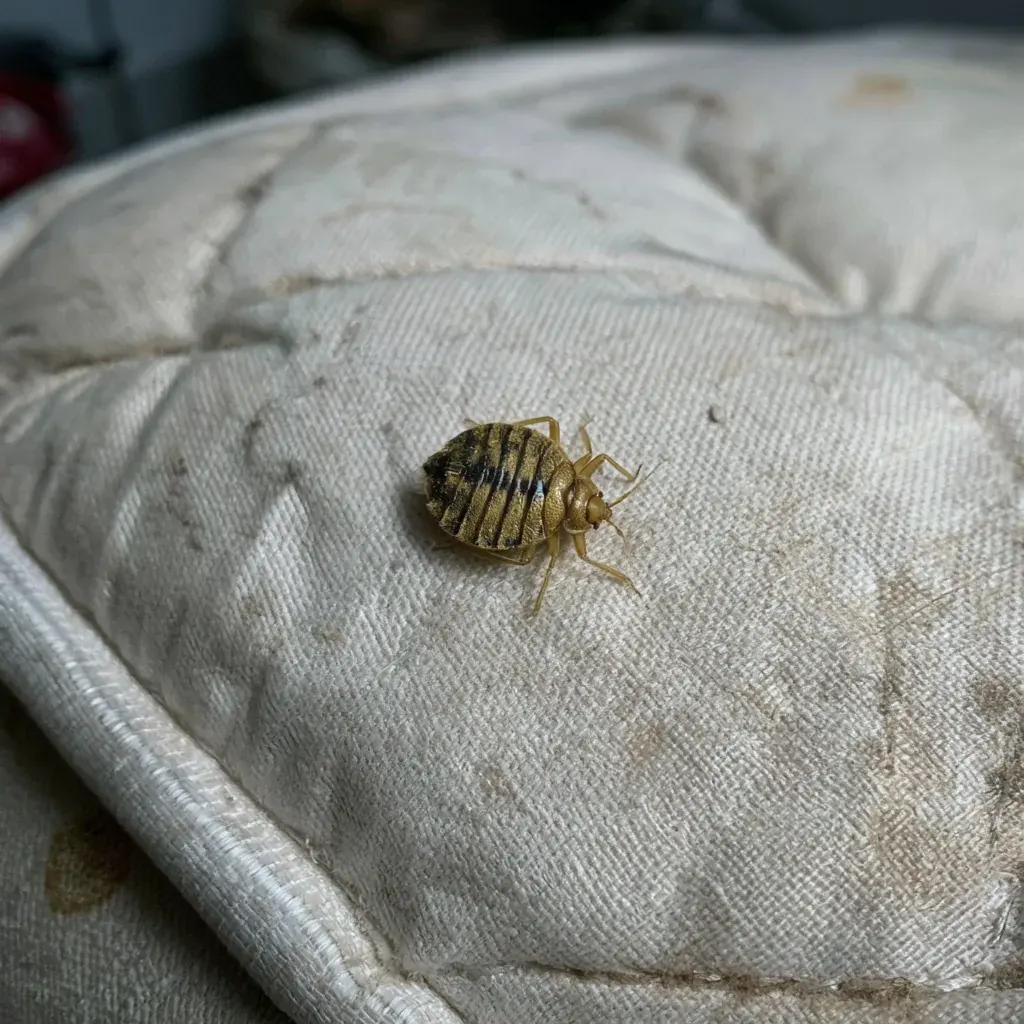
Stored product insects never breach a building. They ride in, inside sealed packaging, as eggs or larvae rather than as anything flying around: a pallet of dog food, cases of pancake mix, sacks of rice bound for a restaurant customer, birdseed, dried fruit, nuts, a mixed return that came back from somebody else's stockroom. This is how a site with a tight perimeter and a swept floor grows a moth population on one rack row and nowhere else.
Receipt is the only point in the process where the problem is still confined to one pallet and still arguably somebody else's. After put away it is distributed across a rack line, folded into rotation and shipped out to your own customers, and nothing applied afterwards recovers that. A short look adds a couple of minutes to a load and removes a much longer conversation later.
What changes supplier behavior is paperwork rather than annoyance. Photograph it, record the load and the lot, hold it in a marked bay away from clean stock, and put the rejection in writing. Humidity here is a factor too: board that would dry out in a colder state stays soft and damp on a Conway dock, which keeps a damaged case habitable for weeks.
Sparrows come in at dock level while doors are up. Pigeons come in higher, through a broken louver, a failed roof light or an open gable. Either way they end up in the steel above the racking, where it is warm, dry and undisturbed, and they will keep using a route they already know. It stays invisible until somebody puts a light on the top beam level and looks at what has been landing on the packaging.
That is the entire issue. Droppings and nest material coming down onto cases, conveyor lines and product held for shipment is a finding on a customer audit, not a housekeeping observation, and it can put a whole hold on a lot. Nest material also blocks the roof drainage it gets built into and brings its own insects with it.
Most of the answer is building fabric: close the roof and louver openings, keep doors down between trailers, net beneath the steel over the areas that matter, and treat the specific perches in use rather than every beam in the place. What is lawful depends on the species, and the distinction is real. The federal Migratory Bird Treaty Act applies to native migratory birds, while the US Fish and Wildlife Service lists non native species including European starlings, house sparrows and rock or feral pigeons as outside its protection. A swallow nesting over a dock door is not the same legal question as a pigeon on a purlin, so identification comes before anybody does anything, and the work belongs with a pro who handles birds.
Stations around the inside perimeter draw a boundary. They do not conduct a search. A mouse population in a distribution center usually lives well inside the footprint: within a wrapped pallet of soft goods, in the space between stacked totes, inside the board of a damaged load nobody broke down, in bulk textiles or insulation, in a rack tunnel where two pallets have sat double stacked since spring. Everything it needs is right there, so there is no reason for it to travel to the wall.
That means somebody has to walk the rows with a light on a slow shift, pull and break down damaged loads instead of rewrapping them, keep an aisle clear along the wall so the perimeter is visible, keep pallets off the uprights, and break floor stacked blocks apart from time to time purely so the middle can be seen. None of that is a treatment and all of it is the job.
Chew damage gets dismissed longest because it passes for handling damage. A neat opening low on a case, film shredded at the base of a wrap, paper confetti in a bottom slot: a forklift does not leave those marks and a nest does.
Across a floor measured in acres, one technician with a sprayer is decoration. What earns its money is every station, trap and monitor numbered on a plan and read at every visit, so the figure that matters is not today's catch but what that particular location has done over six months. One device climbing while the rest stay level points at a place to look, and it does so before anybody on the floor has seen an animal.
The record answers questions that would otherwise be arguments. Did replacing the seals in March work. Do the moth catches at receipt line up with one supplier. Is the population inside the building or leaning on it from the ditch bank. Agree an action level for each device type in advance so a rising count starts an inspection instead of a debate, and revisit the plan whenever racking moves, because a device buried behind a new block has effectively been removed.
When a customer or a third party auditor asks, the plan and the readings are the answer, together with labels and safety data sheets for anything applied, the exclusion work completed and the recommendations still open. Keep it somewhere on site that somebody can open, rather than in a van. Fees for a building this size follow the footprint, the number of dock positions, how many devices the plan calls for and how often somebody attends, and they are set after a lights out walk of the internal perimeter rather than off a floor area figure over the phone.
| What the trend shows | Usual cause | Where to look first |
|---|---|---|
| One exterior station climbing, interior level | Pressure building in the yard or the ditch bank, not yet inside | Vegetation at the wall base, the compactor pad, and any opening at grade near that station |
| Interior devices rising by one dock position | A worn bottom seal, a cracked apron or a pit standing open | That door after dark with the lights off, and inside the pit |
| Catches spread across the middle of the floor | Harborage inside the product rather than a way in | Wrapped pallets, damaged loads, tote stacks and rack tunnels on those rows |
| Moth counts up at receipt only | Infested freight from one supplier | The last few loads from them, and the hold bay records |
| Months of level readings, then a step change | Something physical changed: a storm, a racking move, a new door | The maintenance log and that week's weather, then rewalk the perimeter |
Premises like these are served across Conway and out to Atlantic Beach, Briarcliffe Acres and Bucksport. The first walkthrough happens at whichever location is giving you trouble.
Commercial work is priced by the visit rather than by the job, and a site of this type generally opens around an estimated $89 to $249 each visit. Floor area, how often somebody comes, and how much paperwork you need move it from there. Nobody charges for the initial walk round, and the scope is written down first. Full ranges are published on the pricing guide, and the commercial overview explains how a scheduled account is run.
People before products
The decal, and the review
Rooms out of inventory
You catch them at receipt rather than keeping them out. Add a short look to the routine: under the pallet, the corner blocks, the seams and folds on bagged goods, and one opened case from any supplier with a history. Anything doubtful goes to a marked bay instead of into the racking. Then run pheromone traps at receipt and on the slow moving lines so a rise shows up as a number weeks before it shows up as moths in an aisle, and put every rejection in writing with photographs attached.
As a boundary and as data, yes. As a way of finding the problem, no. Exterior devices intercept what is coming off the yard and the ditch bank, and interior ones tell you where activity concentrates, which is useful. Neither will reach a nest sitting inside a wrapped pallet in the middle of the floor, because nothing living there has any reason to leave. The rack walk is the part that locates it, and the devices are the part that tells you which rows to walk.
Because the water relocates the population instead of removing it. The ditches, swales and ponds around an industrial site fill, and whatever was living in those banks heads for the nearest dry structure with a warm floor. It is also the moment to rewalk the perimeter, since moving water opens joints and washes fill out from under a slab edge, so an entry point can exist in September that genuinely did not exist in May.
Routine visits fit around operations. Devices get read on a route, hardware work gets booked with maintenance, and rack walks land on a slow shift or between waves. Anything applied goes to labeled sites away from stored goods, with the label setting out what has to be covered and how long to stay clear. A heavy stored product job, or anything in a food grade area, gets planned with your quality team and may need a section cleared. Tell the contractor what your own customers require of you first, because those specifications are often tighter than the label.
Identify the species, because that decides what may lawfully be done. The Migratory Bird Treaty Act covers native migratory birds, and the US Fish and Wildlife Service lists non native species such as European starlings, house sparrows and feral pigeons as not protected under it. Then treat it as fabric work: close the openings they use, keep doors down between trailers, net over the areas holding product, and deal with the perches actually in service. Clearing the debris underneath needs dust control and the product below protected, so it gets planned rather than improvised.
If moths are turning up on one rack row, or something is opening cases at floor level, the first hour belongs to the dock line, the pits and the racking rather than to any product. Ring the number on this page and we will put you in touch with licensed local pros who work distribution buildings on this coast, number what they place, and quote hardware work separately from the visit interval.
Call (843) 896-1048