Nobody on this coast gets through a year without meeting a palmetto bug, and calling somebody out over one would be daft. The useful question is not whether you have seen an insect. It is whether what you are seeing is a visitor or a resident, because those two situations need completely different amounts of effort. Below are the seven signals that reliably separate them in a Horry County house.
It comes back on a schedule you could set a clock by
Recurrence is the giveaway. Spray, wipe down, set a trap, and if the same thing is back in the same place two weeks later then the treatment was aimed at the insects rather than at whatever is producing them. Around here the producer is usually somewhere you have not looked: under the floor, behind a vent screen, in a gutter full of leaf litter. Somebody whose job it is will start at the cause and work outward, which is why their result holds and yours does not.
You are meeting night insects in the afternoon
Roaches and rodents avoid people and work in the dark. Seeing one crossing a floor at two in the afternoon means there is competition for space and food where they live, and that only happens once the population is well past the early stage. It is one of the few signs that tells you about numbers rather than presence, so it is worth taking seriously even if you have only seen it once.
There is physical evidence, not just a sighting
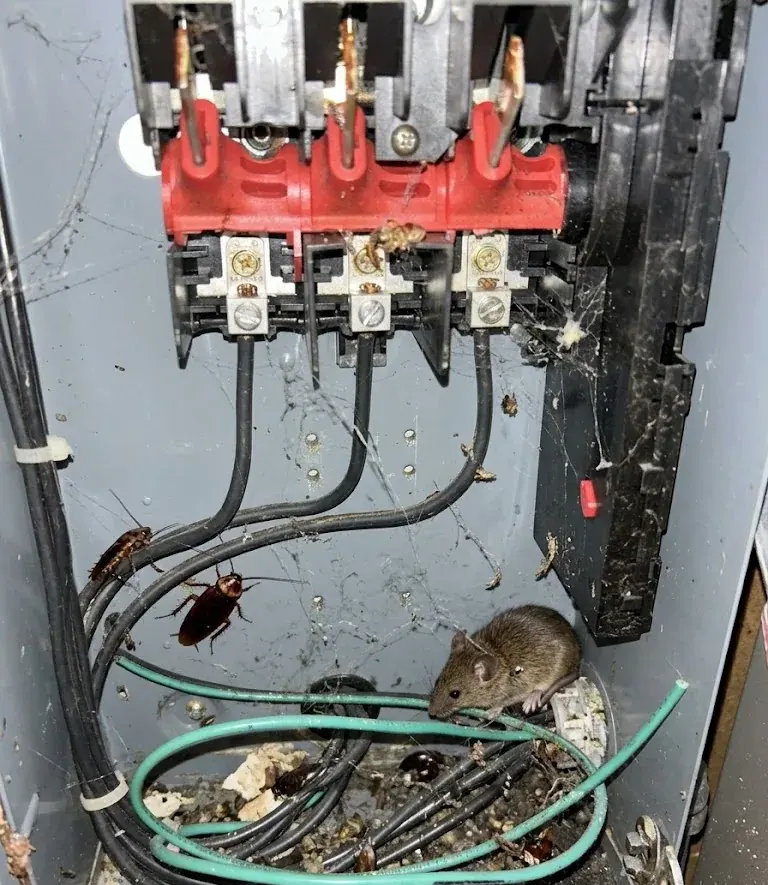
A sighting is an event. Evidence means occupancy. Droppings in the back of a cabinet, gnaw marks along packaging or a wiring run, shredded insulation pulled into a corner of the crawl space, a scatter of identical pale wings on a windowsill, or mud packed up the side of a pier. Anything on that list means something is living in the fabric of the building rather than passing through it, and none of it clears up on its own.
Somebody in the house is going to get hurt
Some of this stops being about the house. A fire ant mound at the bottom of a slide, a yellowjacket nest in the bank beside the front steps, a snake in a crawl space somebody has to get into, roaches working across a kitchen counter. Where there is a sting, a bite or a contamination risk in play, waiting to see how it develops is the wrong call, particularly with a toddler or an older relative who may not spot a mound in the grass.
Anything at all that looks like termites
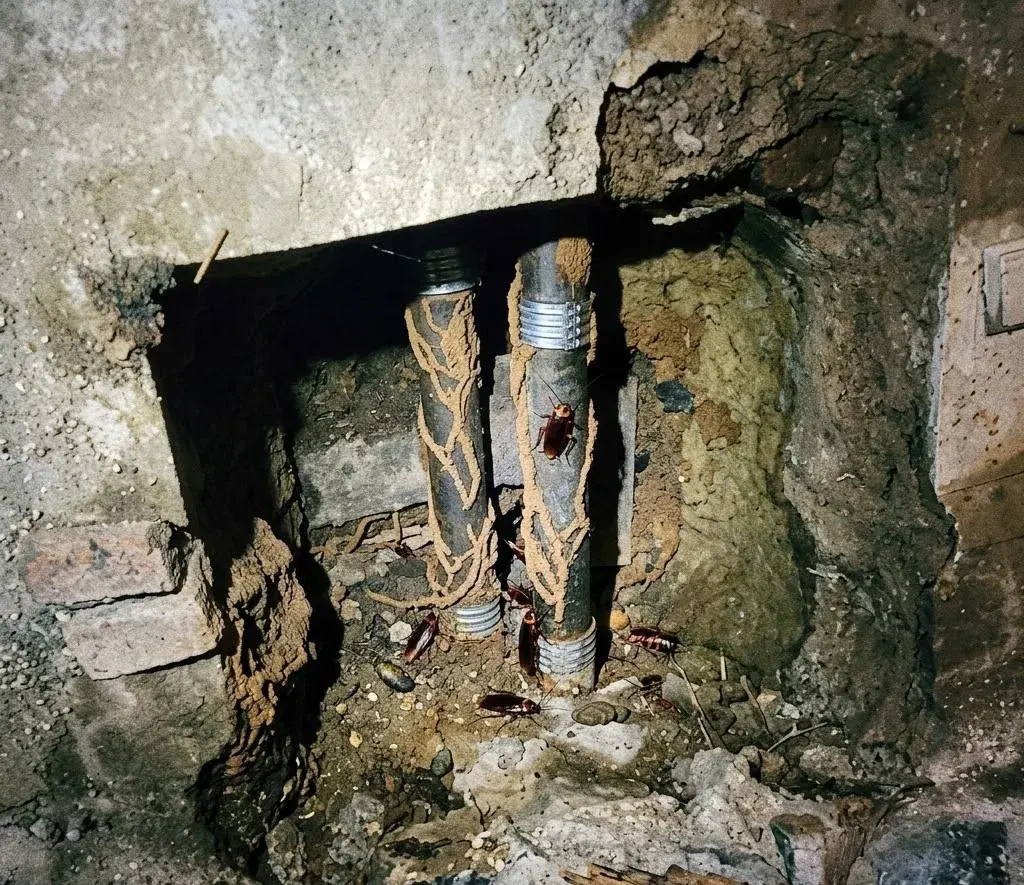
This one is not a judgement call in South Carolina. Coastal counties have both eastern and Formosan subterranean termites, there is no winter that slows either of them meaningfully, and almost all the early evidence sits in the crawl space where nobody looks. Mud tubes on a pier or the curtain wall, wood that sounds hollow along a sill, paint that has gone slightly rippled over a stud, or swarmers emerging indoors. By the time damage is obvious from inside the house it is rarely small, and it will also turn up on a CL-100 report the moment you try to sell.
The products you can buy are not reaching it
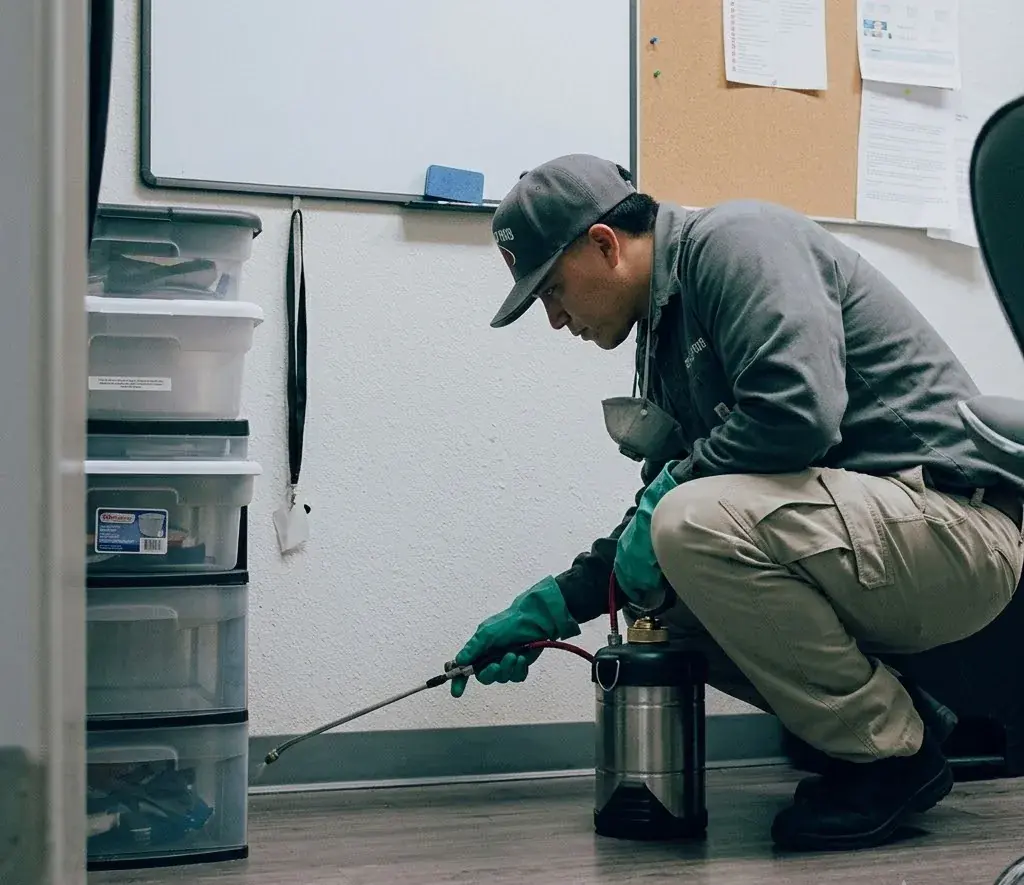
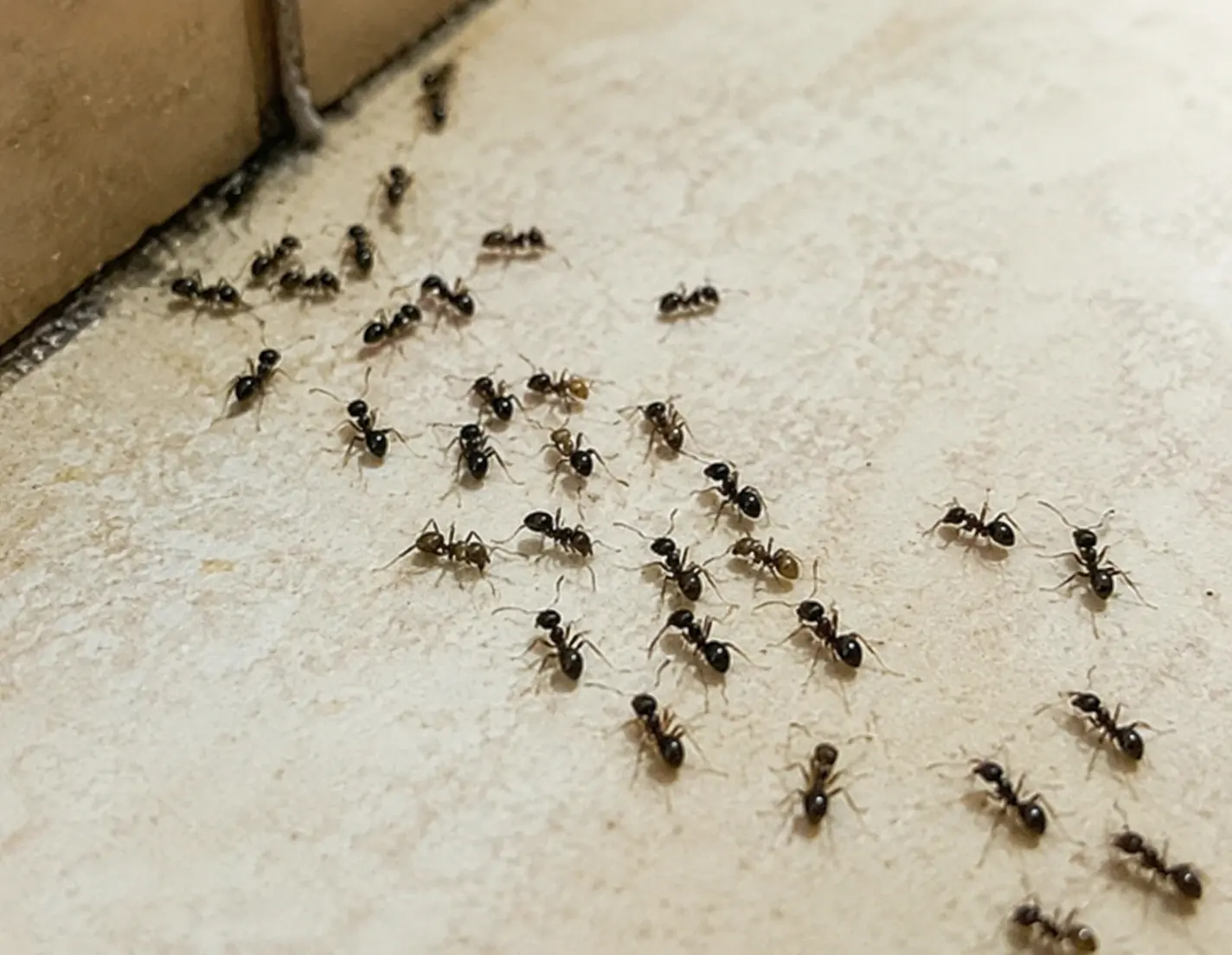
Retail sprays deal with what is on the surface in front of you. They do not reach a colony, a harborage inside a wall void, or eggs. With the fast breeders it is worse than ineffective: a contact spray along an Argentine ant trail causes the colony to bud into several, and a fogger aimed at German cockroaches pushes them deeper into the voids and, in a duplex, into your neighbor. If two weeks of effort has made the map bigger rather than smaller, that is what happened.
It is under the house and you have never been down there
This one is specific to how houses are built around Conway, Aynor and Loris. A vented crawl space on piers holds humidity most of the year, and that damp is what decay fungi and powderpost beetles need, what camel crickets and American cockroaches live in, and what hides mud tubes for years at a time. Plenty of problems people describe as a kitchen problem or a hallway smell are actually a crawl space problem arriving upstairs, because air in a building moves upward. If you have never been under your own floor, that is the first place a decent inspection will go.
You do not have to work it out yourself
None of this needs you to arrive at a diagnosis. An inspection tells you which of the two situations you are in, what it would take to deal with, and whether it genuinely needs dealing with at all, and there is no charge for having somebody look. Ask for the findings in writing and ask what was seen in the crawl space specifically. If the honest answer is that this is one wandering insect and nothing else, that is a perfectly good outcome and you should hear it plainly.
Dealing with this in your home?
We offer free inspections and honest recommendations across Conway and the surrounding towns. Call (843) 896-1048 and we’ll help you sort it out.